













To choose well from a shipping container catalogue, start with the job the unit must do, then narrow the options by container family, nominal size and condition. Before requesting a quote, check the listing location, usable internal and door dimensions, whether photographs show the actual unit, and the delivery and unloading requirements. If the container will carry cargo, confirm its technical data, CSC status and route acceptance. A catalogue builds a shortlist; the supplier still needs to confirm suitability and current availability.
That order matters. Choosing a 20ft, 40ft or High Cube unit first may feel efficient, but it can lead to the wrong result if the equipment cannot support the loading method, cargo, temperature, access pattern or final site. The most useful catalogue search begins with a practical brief, not a product label.
What an online container catalogue can — and cannot — tell you
A well-structured online container catalogue lets you compare the main equipment families, nominal sizes, typical features and condition options. It can help you rule out unsuitable categories and prepare a more precise enquiry. It should not be treated as proof that a particular unit is available, reserved, inspected for your purpose or deliverable to your site.
Use the SILVERSEA Containers shipping container catalogue to compare dry, High Cube, refrigerated and special equipment. Treat dimensions and capacities as category guidance until the supplier confirms the exact model or unit, its data plate and the commercial scope of the offer.
Quick decision rule: shortlist from the catalogue; validate against the exact unit; then request a quote for the equipment and the real delivery operation.
Share the packed dimensions, weight, handling method and location with SILVERSEA Containers.
Start with the use case, not the container size
Write one sentence describing what the container must do. Include the contents or cargo, where the unit will operate, how it will be loaded, whether it will move, how long it is needed and any non-negotiable requirement. This usually identifies the correct equipment family faster than browsing by dimensions alone.
- Static storage: state what will be stored, how frequently it will be accessed, the exposure to weather and whether condensation, security or ventilation needs special attention.
- General cargo transport: provide packed dimensions, gross mass, route and loading method, then confirm the unit’s technical markings, examination position and acceptance for the planned operation.
- Temperature-controlled use: define the product, temperature range, power supply, monitoring needs and whether the reefer must operate in transit, at a site or both.
- Oversized or heavy cargo: describe every out-of-gauge dimension, weight distribution, lifting points and lashing plan so an open-top or flat-rack solution can be assessed.
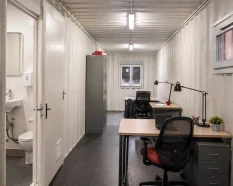
- Conversion or adapted use: explain the layout, openings, utilities, occupancy and destination. Structural, planning, fire, electrical and accessibility requirements may need project-specific review.
Choose the container family that matches the job
| Catalogue family | Useful starting point | Confirm before quoting |
|---|---|---|
| Dry container | General dry cargo or static storage | Door opening, internal dimensions, floor condition, ventilation and whether it will move loaded |
| High Cube dry | Bulky goods or projects needing extra internal height | Total external height, door height, site clearance and whether extra height is genuinely useful |
| Reefer | Chilled, frozen or controlled-temperature applications | Operating temperature, machinery status, power, pre-trip inspection, airflow and monitoring |
| Open top | Cargo loaded from above or projecting above the roof line | Cargo envelope, tarpaulin/bows, lifting plan, route limits and securing requirements |
| Flat rack | Heavy or oversized machinery and out-of-gauge cargo | Load concentration, support points, end-frame configuration, lashing and carrier acceptance |
A special container is not automatically the better option simply because the cargo is unusual. The container, cargo support, handling method and transport route must work as one system. For static storage or conversion, the same principle applies to the container, site and intended human use.
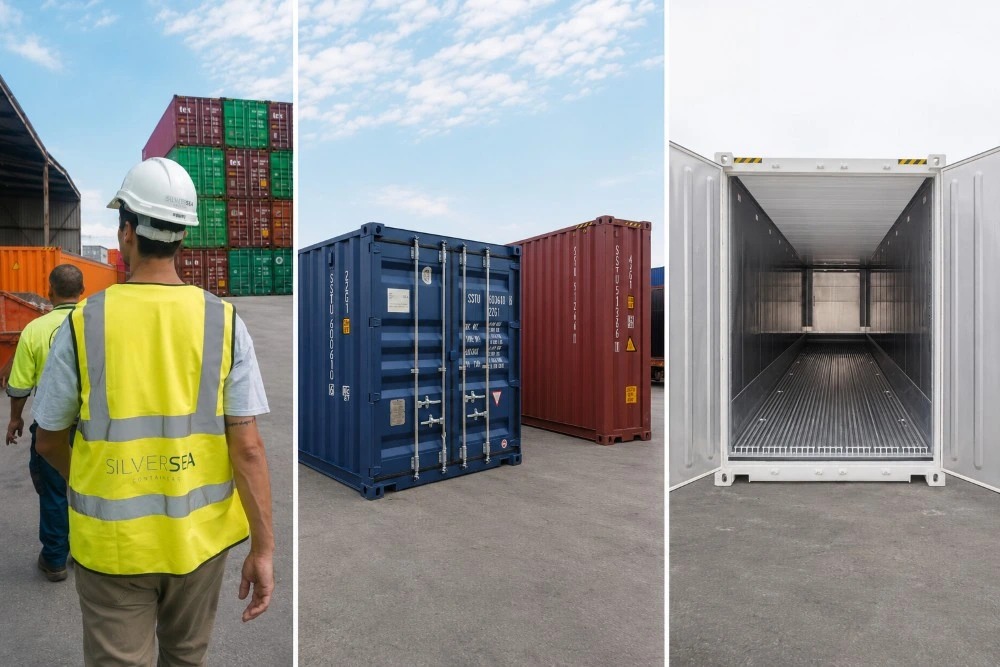
How to choose between 20ft, 40ft and High Cube containers
Nominal length is only the first size filter. Typical ISO Series 1 units have external lengths of approximately 6.06 m for 20ft equipment and 12.19 m for 40ft equipment. A High Cube generally adds about 0.30 m to the external height of a standard-height unit of the same nominal length.
Internal dimensions, door openings, tare, payload and maximum gross mass still vary by design and exact unit.
20ft: smaller footprint, not automatically a smaller decision
A 20ft dry container is often a useful starting point when site length is limited, the required volume is moderate or the cargo is dense. Check the real loaded weight, axle and lifting implications: a physically shorter unit can still create a demanding transport and unloading operation when heavily loaded.
40ft: more floor area, more access to plan
A 40ft unit provides more usable length and volume, which may reduce the number of units needed. It also requires more room for the delivery vehicle, turning, unloading and final placement. Compare the internal length and door opening with the longest item, pallet arrangement or access aisle rather than relying on total cubic capacity alone.
High Cube: useful when height solves a real constraint
High Cube equipment is valuable for tall or voluminous goods and some conversion layouts. Confirm the exact internal and door height, the external clearance along the full route and the unloading equipment. Extra height does not solve limited floor length, payload, door width or weight-distribution problems.
| Common option | Often considered when | Do not overlook |
|---|---|---|
| 20ft dry | Limited site length; moderate storage volume; dense cargo | Loaded mass, internal/door dimensions, delivery and lifting plan |
| 40ft dry | More floor area or long cargo within standard height | Turning room, final position, access aisle and door clearance |
| 40ft High Cube | Bulky cargo or layout requiring extra height | Full-route height clearance, door height and whether volume or payload is the constraint |
How to interpret used shipping container condition
Condition terms are useful filters, but they are not a substitute for a written specification or inspection. The same label may be applied differently across suppliers, depots and markets.
Ask what the grade means in the offer, what has been inspected and which defects are accepted for the intended use.
| Condition label | What it may signal | What to confirm |
|---|---|---|
| New / One Trip | Usually minimal prior service, but handling marks can still be present | Manufacture year, exact specification, cosmetic expectations and warranty scope |
| Cargo Worthy | A transport-focused commercial description | Inspection basis, CSC examination position, repairs and acceptance for the actual route/cargo |
| Wind and Water Tight | Common starting point for static dry storage | Door operation, seals, holes, roof, floor, corrosion and whether transport use is excluded |
| IICL | A reference to recognised inspection/repair criteria | Which criteria and inspection scope apply to the offered unit; do not treat the label as self-explanatory |
| As Is | A unit offered in its present state | Unit-specific inspection, photographs, defects, repairs, exclusions and total remediation cost |
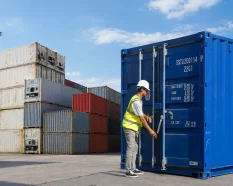
For storage, inspect doors, locking gear, seals, roof, sidewalls, floor, holes, corrosion and signs of previous contamination or odour. For cargo transport, condition must be assessed against the cargo and operation, including the CSC safety-approval framework and the unit’s current examination status.
A cosmetically attractive container is not automatically transport-ready; a cargo-worthy unit is not automatically cosmetically clean.
Ask whether the photographs show the actual unit
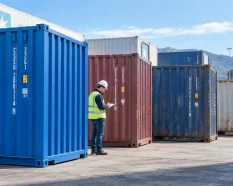
Catalogue galleries often illustrate a product family. If appearance, repairs, floor condition or door operation matters, ask whether the images are unit-specific, recent and taken at the current depot. For multiple units, clarify whether the quoted condition applies consistently across the lot and how exceptions will be handled.
Read the technical fields before comparing listings
| Catalogue field | What it tells you | How to use it |
|---|---|---|
| Size and type code | Identifies the nominal size and equipment characteristics | Check it matches the product description and planned handling |
| Internal and door dimensions | Shows the usable envelope, not only the outside footprint | Compare with packed cargo, pallets, machinery and access aisle |
| Tare / payload / maximum gross mass | Separates empty weight from permitted load ratings | Use the exact unit plate; do not infer payload from nominal size |
| Condition / grade | Indicates the supplier’s commercial condition category | Request the written definition, inspection evidence and exclusions |
| Photos | May be illustrative or unit-specific | Confirm date, identity, floor, doors, roof and visible repairs |
| Depot or location | Shows where the unit is available or released | Assess collection, delivery distance, cross-border movement and timing |
| Quantity | Shows the scale of the requirement | Confirm whether similar units can be supplied together |
| CSC / data plate | Provides safety-approval and technical information for transport equipment | Confirm current status and route acceptance where international transport is planned |
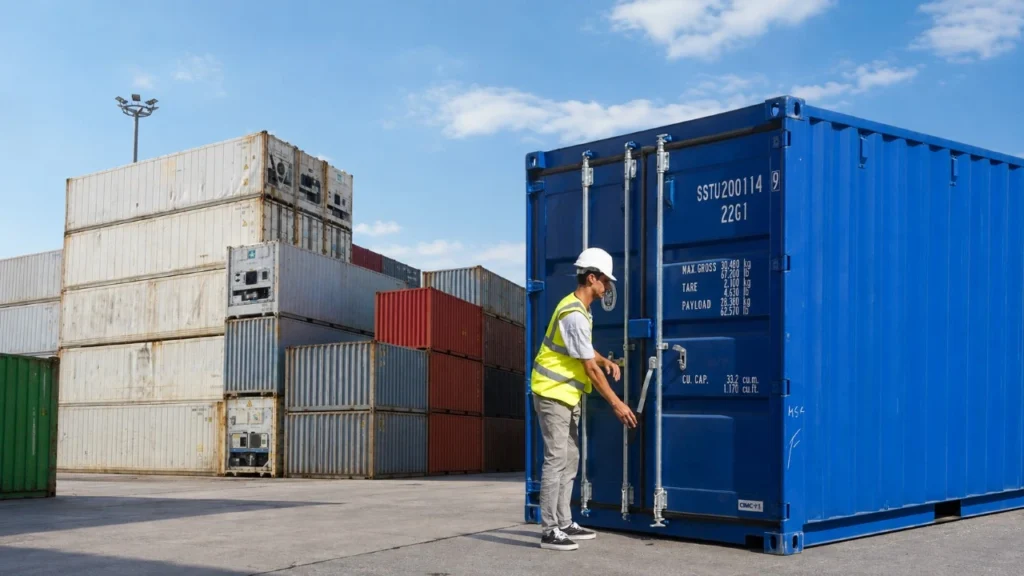
The BIC size and type code is designed to identify a container’s size, type and characteristics, while container markings can also show tare, maximum gross mass, payload and capacity. These markings help identify the equipment; they do not prove condition, availability or suitability for a particular cargo.
Location, delivery and unloading can change the best choice
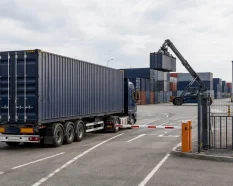
A suitable container at the wrong depot may be less practical than a comparable unit closer to the delivery or collection point. Ask where the equipment is located, whether the quote assumes depot collection or delivery, and which party is responsible for transport, unloading and final positioning.
- Provide the full delivery address or postcode, not only a country or region.
- Measure gates, road width, turning area, height restrictions and the final placement zone.
- Share photographs of the approach, ground and overhead obstacles such as cables or branches.
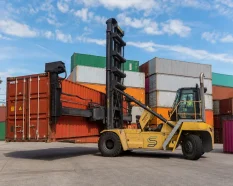
- State whether a crane, sidelifter, reach stacker, forklift or other suitable unloading equipment is available.
- Confirm the required orientation of the doors and the clearance needed for safe access.
- For UK–EU or other cross-border movements, confirm documentation, tax treatment and transport responsibilities for the specific route.
Do not assume that a catalogue price includes delivery, unloading, positioning, taxes or modifications. Ask for the commercial offer to identify each included item, its assumptions, the currency and the quote validity.
Turn your shortlist into a useful quote request
Once the catalogue has narrowed the options, send the supplier a short operational brief. If one detail is unknown, describe the underlying requirement instead of guessing.
- Use and commercial route: purchase or lease; storage, transport, temperature control, conversion or another application; expected duration if relevant.
- Container shortlist: preferred family, size, quantity and acceptable condition, plus any alternative you would consider.
- Contents or cargo: packed dimensions, mass, loading method, temperature, dangerous or sensitive characteristics and access frequency.
- Location and timing: delivery/collection postcode, target window, route and any fixed project date.
- Site and unloading: access measurements, photographs, surface, obstacles, available equipment and final position.
- Evidence and scope: unit-specific photos, inspection, technical sheet, CSC information where relevant, delivery, unloading, taxes, modifications and quote validity.
Example enquiry: We need two containers for dry equipment storage at [postcode/city] for approximately [duration]. We are comparing 20ft and 40ft units because site length is limited. The units will remain static and require weekly access. Please advise on a suitable condition, confirm the depot, provide representative or unit-specific photos, and quote the equipment, delivery, unloading, VAT and optional lockboxes separately. Site measurements and photographs are attached.
Common catalogue-selection mistakes
- Choosing by headline price alone. A lower unit price may exclude delivery, unloading, inspection, repairs or necessary modifications.
- Assuming catalogue images show the offered unit. Ask whether photographs are illustrative, representative or tied to a specific container number.
- Treating condition labels as universal. Request the supplier’s definition, inspection basis, exclusions and acceptance process.
- Comparing only external size. Internal dimensions, door opening, tare, payload and loading geometry often decide whether the unit works.
- Using a storage grade as a transport decision. International cargo use requires transport-specific checks, documentation and route acceptance.
- Ignoring the depot and final site. Container location, road access and unloading can determine feasibility and total scope.
- Assuming a click reserves stock. Availability and reservation exist only on the terms confirmed by the supplier.
Share the packed dimensions, weight, handling method and location with SILVERSEA Containers.
Browse the catalogue, then request advice
SILVERSEA Containers offers standard and specialised maritime container options for purchase and leasing requirements. The appropriate unit depends on the application, quantity, condition, depot, route, delivery site and project date.
Browse the online container catalogue to build a shortlist. Then request a container quote with the intended use, quantity, location, timing and delivery details. The SILVERSEA Containers team can assess the equipment and commercial route before the offer is finalised.
Browse the catalogue and request advice from SILVERSEA Containers
Frequently asked questions
You can create a shortlist without knowing the exact type. Describe the intended use, contents or cargo, dimensions, weight, duration, location and loading method. The supplier can then assess whether a dry, High Cube, reefer or special container is appropriate.
Compare the equipment family, nominal size, internal and door dimensions, ratings, condition description, photographs, depot location, quantity and available technical information. Then check delivery, unloading and suitability with the supplier.
It is a commercial description of the unit’s state. Labels such as Cargo Worthy, Wind and Water Tight, IICL and As Is can have different scopes, so ask for the supplier’s written definition, inspection evidence, photographs, exclusions and any warranty.
No. They may illustrate the product category or show a representative unit. If appearance or specific defects matter, request recent unit-specific photographs and confirm the container identity and depot.
No. The correct size depends on usable space, payload, cargo geometry, site access, delivery equipment and the number of units required. Compare the complete operational requirement, not only volume or unit price.
Use the catalogue to compare and shortlist equipment, then request a quote or advice. Availability, unit condition, location, delivery scope and commercial terms need confirmation before an order is finalised.