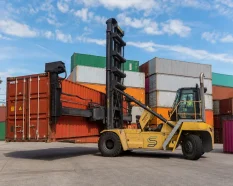














Let’s picture a scenario that keeps facility managers awake at night. You operate a massive distribution center. Your fleet of electric forklifts and AGVs (Automated Guided Vehicles) is powered by lithium-ion batteries.
At 2:00 AM, while the warehouse is empty, a battery that sustained a minor dent earlier that day is plugged into the charging station. Slowly, it begins to overheat.
Within minutes, it catches fire. The warehouse’s standard ceiling sprinklers activate, showering the battery with water. But the fire doesn’t go out; it actually gets worse. By morning, a multi-million dollar facility is reduced to ashes.
This isn’t a hypothetical scare tactic. As industries transition to electrification and Energy Storage Systems (ESS), lithium-ion battery fires have become a leading cause of catastrophic industrial losses. Insurance companies are now refusing to underwrite facilities that store high volumes of lithium batteries inside their main buildings without extreme (and expensive) protective measures.
As logistics and structural consultants, we tell our clients the hard truth: the safest way to deal with a lithium battery fire is to ensure it never happens inside your building.
- In this guide, we will explore the regulations surrounding battery storage and why a lithium battery storage container is the ultimate, legally compliant shield for your business.
The Nightmare of Thermal Runaway
To understand why you cannot store lithium-ion batteries like regular pallets of cardboard, you need to understand the chemistry of a phenomenon called Thermal Runaway.
Lithium batteries store a massive amount of dense energy. If a cell is compromised—whether by mechanical damage (like a forklift dropping it), electrical overcharging, or a manufacturing defect—its internal temperature spikes uncontrollably.
Once it reaches a critical threshold, the electrolytes inside vaporize and ignite. Here is the terrifying part: a lithium fire generates its own oxygen. This is why standard fire suppression systems, like water sprinklers or CO2 extinguishers, often fail to put it out.
The fire is violent, it releases highly toxic and corrosive gases (like hydrogen fluoride), and it can easily spread to adjacent batteries in a chain reaction. Furthermore, even after it appears to be extinguished, the chemical reaction can reignite the battery hours or days later.
Why Keep Batteries Outside Your Main Facility?
Faced with the unstoppable nature of thermal runaway, Health, Safety, and Environment (HSE) experts agree on one primary defense strategy: Risk Isolation.
If you build a dedicated, fireproof concrete room inside your factory to store these batteries, you are still rolling the dice. The smoke alone can ruin millions of dollars in inventory and shut down your operations for weeks due to toxic contamination.
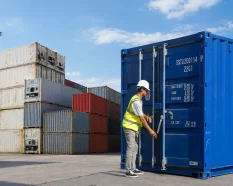
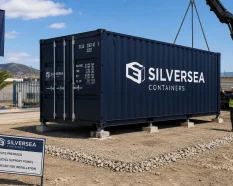
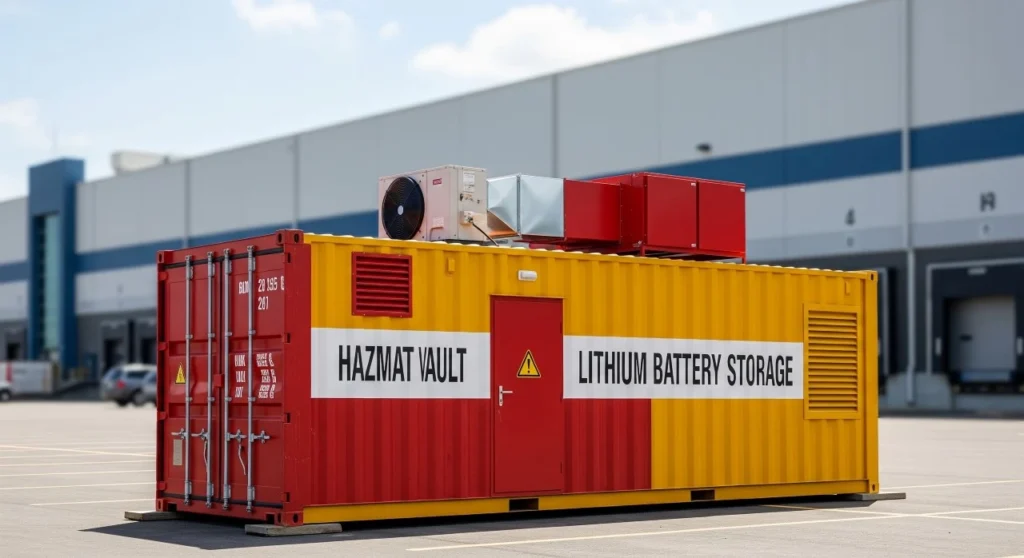
- The strategic alternative is moving the risk outdoors. By utilizing an ESS container (Energy Storage Systems container) positioned at a safe distance from your main facility—typically 10 to 20 feet away, depending on local codes—you are buying the ultimate insurance policy.
If the absolute worst-case scenario occurs and a battery enters thermal runaway inside the container, the fire is contained within a steel box in your parking lot. You might lose the container and the batteries, but you save your factory, your inventory, and your business continuity.
Essential Container Modifications
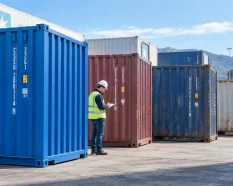
It is crucial to note that buying a standard, empty shipping container and throwing your batteries inside is not a solution. Raw Corten steel is highly conductive; it will transfer the heat of a fire directly to anything touching the outside of the box.
To create a true fireproof container, SILVERSEA engineers radically modify the unit, turning it into a specialized hazardous materials (Hazmat) vault. Here are the non-negotiable modifications required:
Fire Suppression and Climate Control
Lithium batteries are incredibly sensitive to temperature fluctuations. They do not like freezing winters, and they despise scorching summers.
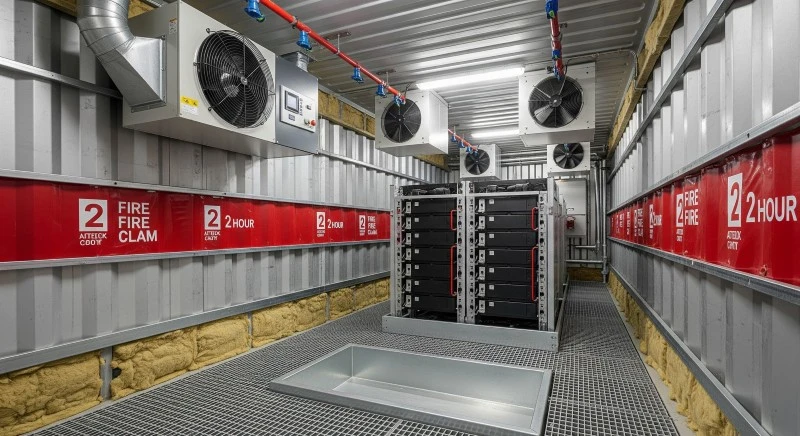
- HVAC Systems: The container must be fitted with an industrial HVAC unit to maintain a constant, optimal ambient temperature (usually between 59°F and 77°F).
- ATEX Ventilation: During charging, batteries can emit flammable off-gases. We install explosion-proof (ATEX-certified) extraction fans that continuously cycle the air to prevent gas buildup.
- Active Fire Suppression: The ceiling is equipped with smoke and heat detectors wired to a clean-agent fire suppression system (such as Novec 1230 or FM-200). These agents flood the container to suppress the fire early without using water, which can cause dangerous short circuits.
- Fire-Rated Insulation: The interior walls, ceiling, and doors are lined with high-density mineral wool or calcium silicate boards to achieve a 2-hour fire resistance rating. This ensures the steel structure won’t collapse and the heat won’t escape for at least 120 minutes.
Spill Containment (The Catch Basin)
When a lithium battery fails or is extinguished, it leaks highly toxic liquid electrolytes and heavy metals. If this chemical cocktail seeps through the wooden floor of a standard container and enters the soil or municipal drainage system, you will face severe environmental fines.
To prevent this, the original marine plywood floor is removed. In its place, we install a galvanized steel spill containment bund (a false floor basin) covered by heavy-duty steel grating. Any leaking chemicals or contaminated suppression liquids fall safely into this basin, securely contained until a hazardous waste disposal team can pump it out.
Compliance with NFPA 855
In the United States, the gold standard for lithium battery storage is dictated by the National Fire Protection Association, specifically NFPA 855 (Standard for the Installation of Stationary Energy Storage Systems).
Navigating NFPA 855 can be a bureaucratic nightmare if you are trying to retrofit an existing building. However, utilizing a purpose-built shipping container drastically simplifies compliance. Because the container is classified as an outdoor, detached enclosure, the strict spacing and fire-barrier rules are much easier to satisfy.
Our modified units are designed with NFPA regulations in mind, incorporating the required fire-resistance ratings, deflagration venting (panels that safely blow out to release pressure during an explosion), and proper electrical grounding. It is a «Plug & Play» compliance solution.
Protect Your Assets with SILVERSEA Containers
Do not wait for an insurance audit—or worse, a thermal runaway event—to upgrade your safety protocols. The transition to electric fleets and energy storage is the future, but it must be managed with absolute operational discipline.
At SILVERSEA Containers, we don’t just supply steel boxes; we engineer risk-management solutions. We provide fully modified, customized containers built specifically for the safe charging and storage of lithium-ion batteries, delivered directly to your facility.
Isolate the threat, protect your workforce, and secure your supply chain.
Does your facility need a compliant battery storage solution?
Contact our B2B engineering team today to discuss your technical requirements and get a custom quote for a fire-rated container.