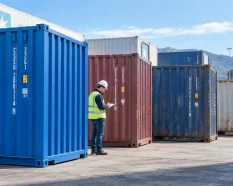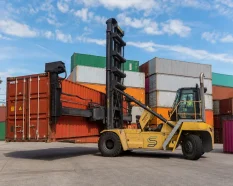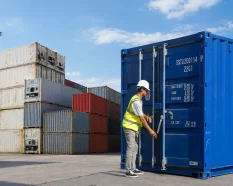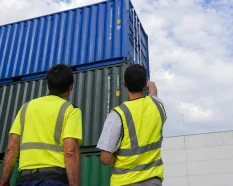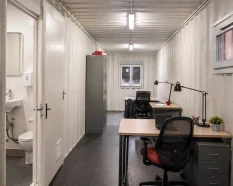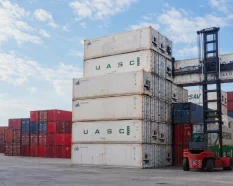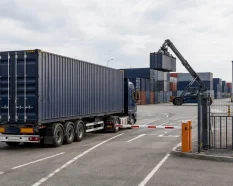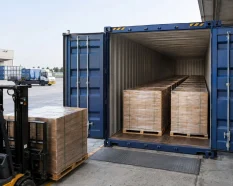














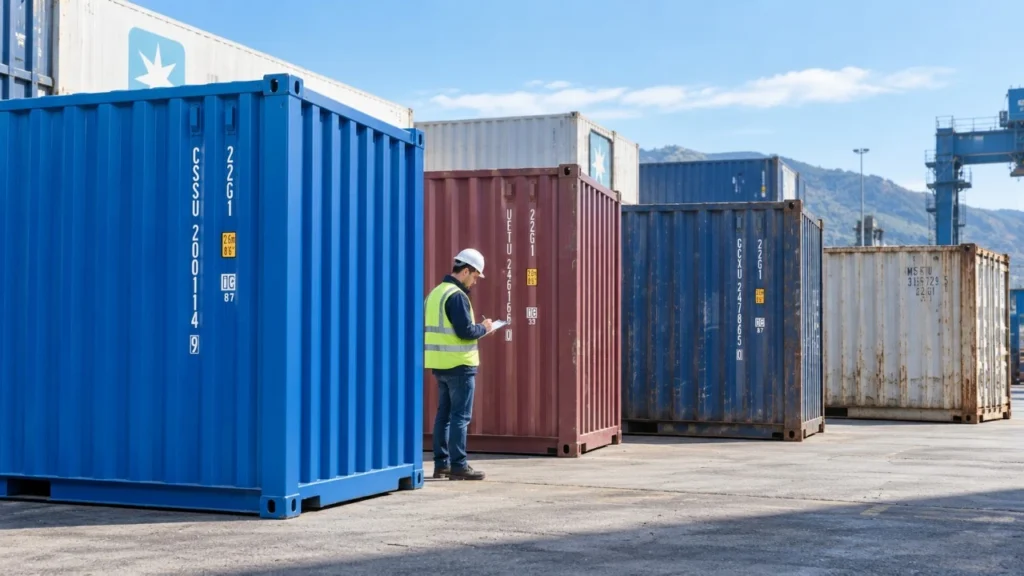
The right used shipping container grade depends on what the unit must do. For international or project cargo movement, start by asking for Cargo Worthy (CW) equipment and written confirmation of the relevant CSC examination or approval status. For stationary storage, a Wind and Water Tight (WWT) container may be more appropriate, but WWT does not automatically mean that the container is suitable for cargo transport.
One Trip is generally the near-new option, while As-Is means that the unit is offered in its present condition and requires a clearly defined inspection, repair or handling plan.
These labels are commercial condition descriptions rather than universal legal grades. Their detailed criteria can vary between suppliers, depots, inspection providers and individual transactions. Before buying a used shipping container in Europe, confirm the exact unit, inspection scope, documentation, intended use and commercial terms in writing.
You can also review the available maritime container types before deciding which condition best suits your requirements.
At-a-glance comparison of used shipping container grades
| Grade | Typical condition description | Likely fit | Transport suitability | Watertightness expectation | What to verify | Key caveat |
| One Trip | Nearly new equipment typically used for a single repositioning or cargo journey | Appearance-sensitive buyers and long-term asset use | Potentially suitable, subject to the unit’s documentation and movement requirements | Generally expected to be in good condition, but seals, roof and doors should still be inspected | Factory or depot history, unit-specific photos, CSC details where relevant, floor, doors and paint | One Trip does not mean flawless, untouched or free from handling marks |
| Cargo Worthy (CW) | Used equipment assessed under the supplier’s or inspection provider’s criteria as suitable for cargo transport | International, project or single-move cargo | Intended for cargo movement, but current CSC and carrier or routing requirements must still be confirmed | Should be checked as part of the offered unit’s condition; do not infer a guarantee from the label alone | CSC plate and examination status, inspection evidence, repairs, structural condition and routing requirements | CW criteria and acceptance can vary; a CSC plate alone is not a blanket quality guarantee |
| Wind and Water Tight (WWT) | Unit assessed as excluding wind and water under the supplier’s stated inspection criteria | Stationary or local site storage | Not automatically suitable for international shipping or frequent cargo movements | Expected to protect stored goods from ordinary wind and water ingress at the time of inspection, subject to the agreed condition | Roof, walls, door gaskets, door operation, floor, corrosion, daylight, leaks, residue and odours | WWT is generally storage-focused and is not equivalent to Cargo Worthy |
| As-Is | Sold in its present condition, without assuming repairs to an upgraded condition | Defined repair, parts, industrial handling or scrap plan | Do not assume transport suitability | Not guaranteed; inspect the specific unit | Damage details, photos, inspection access, repair estimate, handling method and intended use | Condition may differ substantially between units; disclosure and inspection are essential |
First, separate container condition from CSC status
The International Convention for Safe Containers (CSC) establishes an international framework for the safety approval, testing, inspection and maintenance of containers used in international transport.
A container’s safety approval is evidenced through its CSC safety approval plate and related examination status. This safety regime is separate from a supplier’s commercial description of the container’s appearance or general condition.
In practice, this means that Cargo Worthy should not be treated as a universal legal certification, and a CSC plate should not be treated as proof of every aspect of a container’s current condition.
Where cargo transport is planned, ask for the plate details, the relevant examination information and confirmation that the offered unit meets the requirements of the intended movement. Carrier, terminal, depot and country procedures may also affect whether a container is accepted for a particular shipment.
The owner remains responsible for maintaining the container and for the applicable periodic examination process under the CSC framework. Before purchase, check that the markings are legible and consistent with the documentation. The maximum gross mass marked on the container should also correspond with the information on the CSC approval plate.
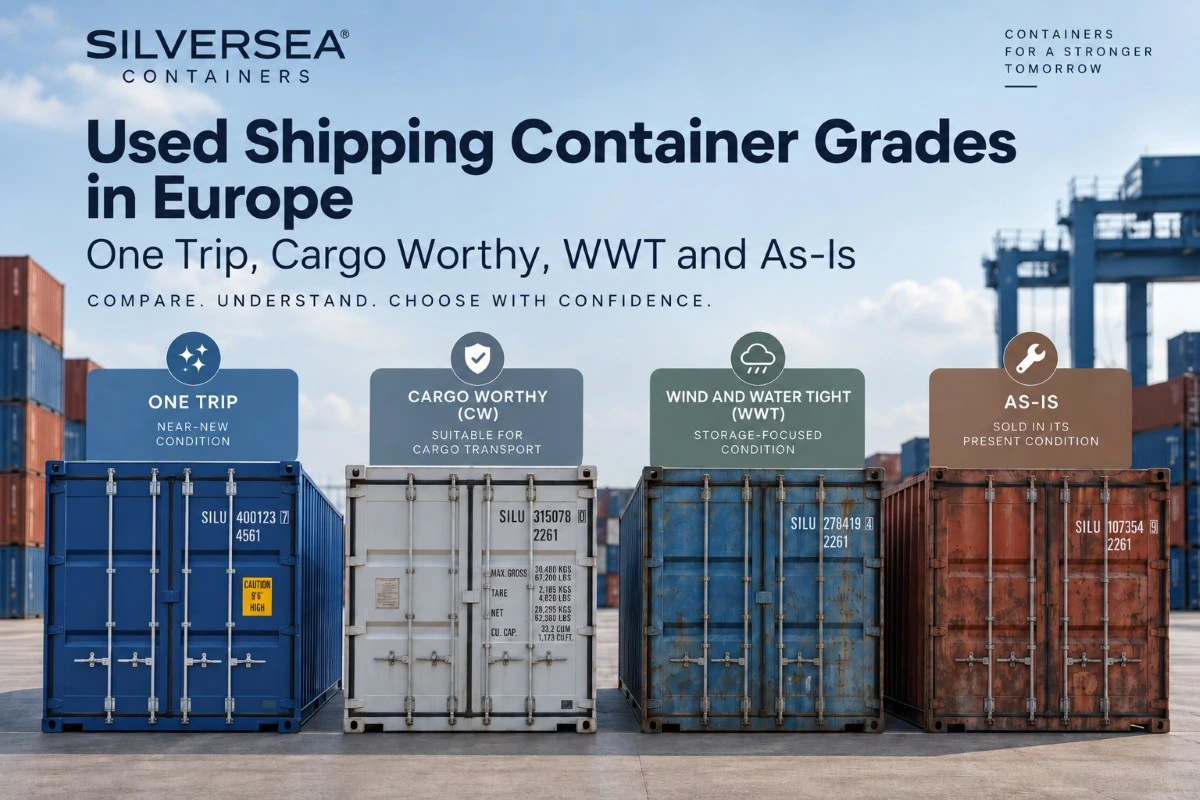
One Trip containers: near-new, not necessarily mark-free
One Trip usually describes a near-new container that has been used for no more than one cargo or repositioning journey, commonly to move it from its manufacturing origin to a sale or delivery location.
It is generally considered by buyers who prioritise a newer asset, a cleaner interior history or better cosmetic presentation than a conventional used container.
However, One Trip does not mean untouched.
Lifting, loading, discharge, road transport and depot movements can leave:
- minor dents;
- paint wear;
- surface marks;
- handling marks;
- small cosmetic imperfections.
The buyer should still inspect the doors, locking bars, rubber seals, roof, corner castings, floor and interior. It is also important to confirm whether photographs supplied by the seller show the actual allocated unit or only a representative example.
For cargo transport, request the relevant CSC and examination information rather than relying on the One Trip description alone. The intended route, carrier and cargo requirements should also be clarified before purchase.
One Trip can be a strong option when condition and appearance matter, but the documentation and physical state of the specific unit remain decisive.
Cargo Worthy (CW): used equipment for cargo transport, subject to verification
Cargo Worthy (CW) generally means that a used shipping container has been assessed under the supplier’s or inspection provider’s criteria as structurally suitable for cargo transport.
It is the condition to investigate when the container will:
- carry cargo internationally;
- move between project locations;
- be used for a defined shipment;
- require a transport-oriented condition rather than stationary storage only.
A Cargo Worthy container can still have visible dents, repaired areas, corrosion, faded paint or touch-ups. Cargo Worthy is not a promise that the unit looks new.
The description relates primarily to a transport-oriented condition assessment, and the precise threshold can differ between suppliers, depots and inspection providers.
Before ordering, ask for the current CSC plate and examination details where transport is intended. Request unit-specific photographs or inspection evidence and clarify any repairs or known defects included in the offer.
If a carrier, terminal or receiving country has a particular acceptance procedure, confirm it before committing to the purchase.
The seller’s description and the requirements of the planned movement should align.
Cargo Worthy vs WWT: the distinction that changes the buying brief
Cargo Worthy and WWT are sometimes confused, but they normally address different intended uses.
| Question | Cargo Worthy (CW) | WWT |
| Primary purpose | Transport-oriented condition assessment | Storage-oriented weather-exclusion condition |
| Best starting point when | The container will carry or move cargo | The container will remain in a local or stationary storage role |
| What the label does not prove | Guaranteed carrier acceptance, flawless appearance or compliance with every route requirement | International transport suitability, current CSC status or structural fitness for cargo movement |
| Main checks | CSC plate and examination status, structural condition, repairs, doors, floor and routing requirements | Roof, sidewalls, doors, gaskets, floor, corrosion, daylight, leaks, residue and odours |
| Commercial question to ask | What documentation and inspection scope support the CW description for this unit? | What wind and water inspection was performed, and what defects remain? |
The practical distinction is straightforward:
CW is the condition to investigate for cargo transport. WWT is generally the condition to assess for stationary storage.
A WWT container may be physically sound for a particular storage purpose, but the WWT label alone does not establish that it can be shipped internationally or accepted by a carrier.
WWT shipping containers: storage-focused condition, not a transport promise
A Wind and Water Tight shipping container is generally described as a unit inspected to exclude ordinary wind and water penetration according to the supplier’s stated inspection criteria.
A WWT container may still have:
- substantial cosmetic wear;
- previous repairs;
- surface corrosion;
- faded or mismatched paint;
- dents that do not prevent its intended storage use.
The inspection should always reflect the goods to be stored and the expected storage period.
Check the roof and sidewalls for damage, operate the doors, examine the door gaskets and look for daylight or evidence of previous leaks. Review the floor condition and ask about previous cargo, residue and odours when these could affect the planned goods.
A general condition label does not replace additional requirements for specialised applications, contamination-sensitive products or goods requiring particular hygiene or storage conditions.
It is also important to agree what is included in the offered condition and at what point the condition is assessed.
WWT should therefore be understood as a description of the container at an agreed stage of the transaction, not as an unconditional guarantee of performance after subsequent delivery, handling or relocation.
Share the packed dimensions, weight, handling method and location with SILVERSEA Containers.
As-Is containers: buy against a defined repair, parts or scrap plan
As-Is means that the container is sold in its present condition rather than repaired or upgraded to meet another commercial condition description.
Depending on the individual unit, it may have:
- significant corrosion;
- structural or cosmetic damage;
- missing or defective components;
- floor damage;
- door problems;
- uncertain watertightness;
- previous repairs.
The label does not mean that every As-Is container is unusable. It does mean that the buyer needs to establish whether the individual unit is suitable for the intended purpose.
Before considering an As-Is container, obtain unit-specific photographs and a written description of visible damage.
Where possible, arrange inspection access or request sufficiently detailed inspection evidence. Estimate repair, lifting, transport and handling requirements before deciding whether the unit remains commercially viable.
As-Is may be suitable for a clearly defined industrial repair, parts-recovery or scrap plan.
It is generally a poor choice when the buyer needs predictable cargo transport or storage performance without further work or assessment.
Do not assume that the seller will repair, certify, make watertight or upgrade the container unless those works are expressly included in the written offer.
What to ask before requesting a used container by grade
A precise enquiry helps the supplier identify appropriate equipment and prevents a condition label from being interpreted too broadly.
Before requesting availability, provide or confirm:
- Intended use: international cargo movement, project shipment, local storage, repair, parts or another industrial purpose.
- Container type and size: for example, 20 ft, 40 ft or High Cube.
- Quantity required.
- Preferred delivery or collection location.
- Requested grade: One Trip, Cargo Worthy, WWT or As-Is, including any acceptable alternatives.
- Transport requirements: whether cargo movement is planned and what CSC, carrier, terminal or routing requirements apply.
- Cosmetic tolerance: acceptable dents, repairs, corrosion, paint variation or floor wear.
- Goods-specific considerations: previous cargo, odours, residue, flooring or contamination-related requirements.
- Unit-specific photographs or inspection evidence.
- Whether photographs show the allocated container or a representative unit.
- Repairs included in the offered condition and any exclusions.
- Delivery or collection scope and relevant commercial terms.
This information is particularly important when purchasing multiple containers, as the condition can vary between individual used units even when they are sold under the same general description.
Choose the container grade by intended use
The following decision paths can be used as a buying framework. They should not be treated as a guarantee that a particular unit is eligible for a specific movement or application.
1. International or project cargo movement
Start by asking for Cargo Worthy equipment.
Request the CSC plate and examination documentation relevant to the intended movement and confirm any additional carrier, terminal or routing requirements where necessary.
2. Stationary or local storage where appearance is secondary
Assess WWT equipment against a defined inspection checklist covering:
- roof;
- doors;
- seals;
- floor;
- corrosion;
- evidence of leaks;
- intended stored goods.
3. Condition-sensitive or long-term purchase
Ask about One Trip equipment, but still inspect the actual unit, including:
- doors;
- seals;
- roof;
- floor;
- interior;
- cosmetic condition;
- relevant documentation.
4. Repair, parts or scrap project
Consider As-Is equipment only after reviewing the damage, inspection access, handling requirements and estimated repair needs of the specific container.
5. The intended use is not yet clear
Describe how and where the container will be used before choosing a grade.
The most useful question is not simply: “What grade is available?”
It is:“What must this container do?”
Condition is also only one component of the total purchase decision. For broader pricing factors, see our shipping container cost guide.
The final choice should take into account the unit’s physical condition, documentation, intended use, logistics requirements and total commercial scope.
Request availability by grade
When requesting a quote from SILVERSEA Containers, include the required container type and size, quantity, location, intended use and preferred condition grade.
Used container availability and the condition of individual units can vary, so confirm the inspection scope, available documentation and any unit-specific requirements as part of your enquiry.
Ask SILVERSEA Containers for availability by grade and indicate whether you are looking for One Trip, Cargo Worthy, WWT or As-Is equipment.
If cargo transport is planned, also include the intended route or movement requirements so the relevant condition and documentation can be discussed with the commercial team.
Share the packed dimensions, weight, handling method and location with SILVERSEA Containers.
Frequently asked questions
No. Cargo Worthy is generally a transport-oriented condition description, while WWT is generally used for a storage-oriented condition where the unit is assessed to exclude ordinary wind and water penetration.
WWT does not automatically establish international transport suitability or CSC status.
Not by itself.
Ask whether the specific container has the required transport documentation and appropriate physical condition, and confirm the acceptance requirements for the planned movement.
WWT is normally approached as a storage-oriented condition rather than a promise of cargo eligibility.
No. One Trip generally refers to near-new equipment used for no more than one cargo or repositioning journey. The container can still show handling or transit marks and should be inspected for doors, seals, roof, floor, paint, interior condition and relevant documentation. One Trip should not automatically be interpreted as flawless or untouched.
Provide the intended use, container type and size, quantity, location and requested condition grade.
Ask for the exact unit or clear unit-specific photographs where available, together with the inspection scope, known damage or repair details, floor and interior information, and CSC or examination documentation when cargo transport is planned. Also clarify what is included in the commercial offer and what remains the buyer’s responsibility.