














In the pharmaceutical and biotechnology sectors, logistics is not just about moving freight from point A to point B; it is an extension of the manufacturing process itself. When a laboratory produces a high-value batch of biological therapies, vaccines, or active pharmaceutical ingredients (APIs), the efficacy of that product relies entirely on an unbroken, highly regulated cold chain.
A single logistical failure—a power outage at a port, a delayed customs inspection, or a faulty cooling unit—can cause internal temperatures to deviate from their required parameters. In the pharma industry, a temperature excursion does not just result in a damaged product; it triggers mandatory regulatory quarantines and, in most cases, the complete destruction of multi-million-dollar cargo.
Faced with the growing demand for cold storage solutions, especially during seasonal vaccine distributions or clinical trial rollouts, pharmaceutical companies are reconsidering their infrastructure strategies. Instead of investing heavily in permanent cold storage facilities, supply chain directors are increasingly turning to specialized Reefer (refrigerated) container leasing.
As logistics consultants, we will explore the technical capabilities of modern pharmaceutical-grade Reefers, the critical role of redundancy, and why leasing offers the ultimate blend of compliance and financial agility.
Zero Tolerance for Temperature Fluctuations
The regulatory landscape for pharmaceutical logistics is arguably the most stringent in the world. Guidelines such as the Good Distribution Practice (GDP) mandated by the European Medicines Agency (EMA) and the U.S. Food and Drug Administration (FDA) require absolute proof that a medical product was maintained within its strict temperature limits for the entire duration of its journey and storage.
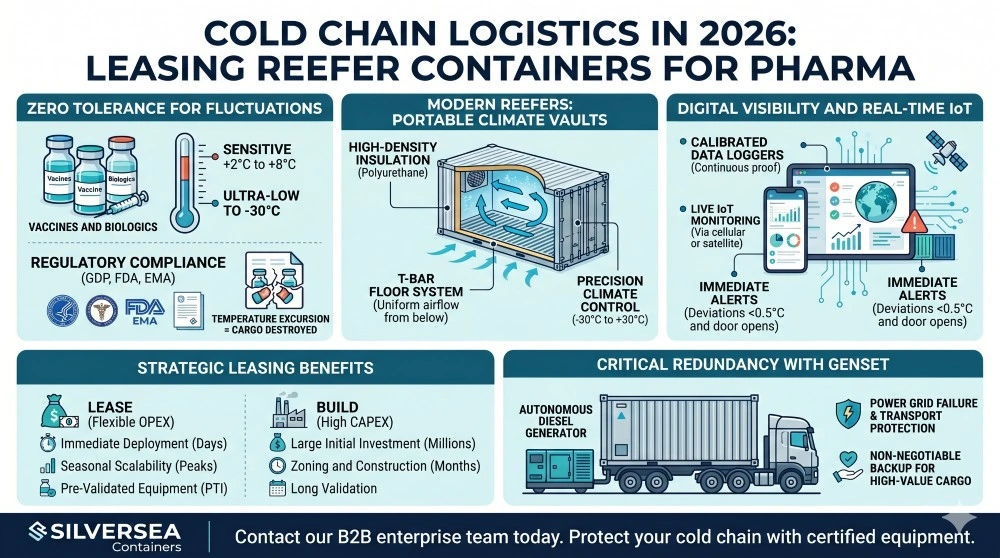
Biologicals and vaccines are highly sensitive molecules. Many require strict maintenance between +2ºC and +8ºC (35ºF to 46ºF), while certain mRNA vaccines or advanced therapeutics require ultra-low freezing environments reaching down to -30ºC (-22ºF) or beyond.
If the internal temperature of the storage unit spikes due to external ambient heat, the proteins in the medication can denature, rendering it useless. Conversely, if a +2ºC shipment accidentally drops below freezing, the liquid components can crystallize, fracturing the glass vials or destroying the molecular structure. In this high-stakes environment, standard refrigeration methods are insufficient; you require clinical-grade thermal management.
How Modern Reefers Protect Biologicals
When pharmaceutical executives picture a shipping container, they often imagine a raw steel box. However, a modern Reefer container is a highly advanced, portable climate-control vault.
If you lease a specialized unit for pharmaceutical storage, you are utilizing engineering designed specifically for thermal stability:
- High-Density Insulation: The walls, roof, and doors of a Reefer are constructed with a sandwich-panel design featuring high-density polyurethane foam. This exceptional insulation ensures that even if the container is exposed to extreme external climates (such as sitting on a tarmac in Dubai in mid-summer), the internal environment remains completely unaffected.
- The T-Bar Floor System: Unlike the flat wooden floors of standard containers, Reefers utilize an aluminum «T-bar» floor. The refrigeration unit pushes chilled air through the bottom of the container along these grooves. The air flows continuously under the palletized cargo, rises to the ceiling, and returns to the cooling unit. This bottom-up airflow guarantees a uniform temperature distribution, eliminating the «hot spots» that typically plague standard warehouses.
- Precision Climate Control: Modern Reefers allow operators to set a specific target temperature (the Set Point) ranging from -30ºC to +30ºC. The micro-controller constantly adjusts the cooling capacity and humidity levels to hold that exact degree, regardless of external weather changes.
Data Loggers and Real-Time IoT Monitoring
In the pharmaceutical industry, keeping the product cold is only half the requirement; the other half is proving it. Without an unbroken digital paper trail demonstrating temperature compliance, a receiver will legally reject the shipment.
This is where the integration of telematics and IoT (Internet of Things) elevates the Reefer from a simple cooler to an intelligent logistics asset.
Premium refrigerated containers are equipped with independent, calibrated data loggers. These devices continuously record the internal temperature at specific intervals (e.g., every 15 minutes) and store the data securely.
More importantly, modern leased fleets feature real-time IoT monitoring. The container’s micro-controller transmits live data via cellular or satellite networks directly to your supply chain dashboard. If the internal temperature deviates by even 0.5 degrees, or if a door is opened by unauthorized personnel, the system triggers an immediate alert to your operations team. This proactive visibility allows you to intervene and resolve technical issues before a temperature excursion ruins the batch.
Leasing vs Building Permanent Cold Rooms
When a pharmaceutical manufacturer scales up production, the immediate challenge is storage capacity. Building a new, permanent cold storage facility (CAPEX) involves significant barriers: it requires millions in upfront capital, rigorous zoning permits, specialized construction, and months of FDA or EMA validation processes before it can be used.
Leasing Reefer containers provides a highly strategic alternative that aligns with agile corporate finance:
- Immediate Deployment: A leased Reefer can be delivered, placed in your facility’s secure yard, and powered on within a matter of days. It acts as an instant, modular extension of your existing cold rooms.
- Scalability: Pharmaceutical demand is often seasonal (e.g., the annual flu vaccine rollout). Leasing allows you to acquire 10 Reefers for the peak quarter and return them when demand subsides, effectively converting a heavy capital expense into a flexible operational expense (OPEX).
- Pre-Validated Equipment: High-quality leasing providers ensure that the refrigeration machinery undergoes a rigorous Pre-Trip Inspection (PTI) before delivery, guaranteeing that the equipment meets manufacturer specifications and is ready for immediate pharmaceutical deployment.
The Importance of Genset Backups
There is one critical vulnerability when relying on active refrigeration: the power supply. A Reefer requires a continuous, high-voltage electrical connection (typically 3-phase, 380V/460V) to operate its compressor. If the local power grid fails, or if the container needs to be transported via truck from the laboratory to the airport, the cooling unit loses power.
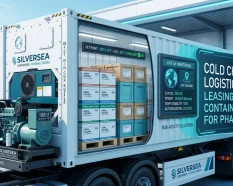
To maintain the integrity of the cold chain during transport or power outages, pharmaceutical shipments rely on a Genset (Generator Set).
A Genset is a heavy-duty, diesel-powered generator that attaches directly to the container (either «clip-on» to the front or «underslung» beneath the truck chassis). It provides autonomous, continuous electricity to the Reefer’s cooling unit.
When leasing containers for high-value biologicals, securing an accompanying Genset is a non-negotiable requirement. It is the ultimate redundancy system, ensuring that your $5 million cargo remains perfectly chilled even during a total facility blackout or a cross-country transit.

Secure Your Supply Chain with SILVERSEA Containers
When patient health and millions of dollars are on the line, you cannot afford to compromise on your logistics equipment.
At SILVERSEA Containers, we understand the rigorous demands of pharmaceutical supply chains. We offer flexible leasing solutions for state-of-the-art 20-foot and 40-foot High Cube Reefer containers, meticulously maintained and capable of sustaining the most demanding temperature profiles.
Whether you need static cold storage to expand your laboratory’s capacity or a reliable mobile fleet for international distribution, we provide the certified equipment and Genset redundancies required to protect your vital cargo.
Are you facing a shortage of specialized cold storage? Contact our B2B enterprise team today to discuss your specific temperature requirements and secure your Reefer leasing contract.