













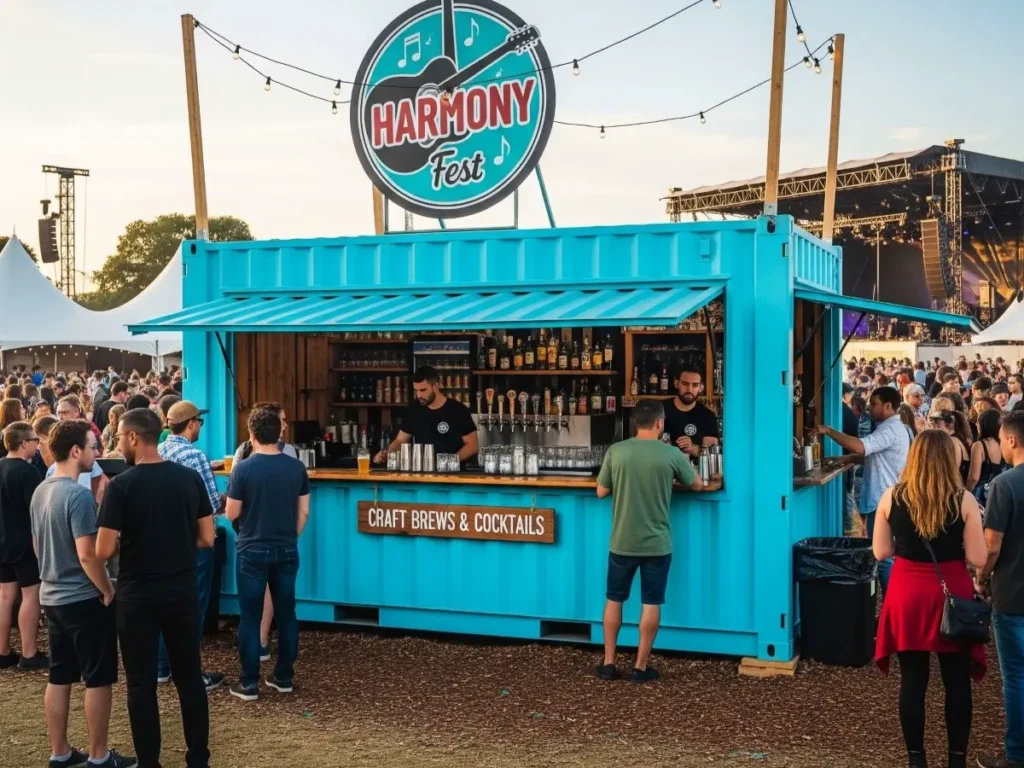
Containers have become one of the most versatile and reliable structures for modern events—festivals, trade fairs, corporate activations, pop-up experiences, food markets, backstage areas, ticketing booths, VIP lounges and more. Their durability, mobility, and ability to be fully customized make them an attractive solution for organizers looking for functional spaces that can be delivered and installed quickly.
However, despite their advantages, event planners often run into issues because of avoidable mistakes during the rental process. Choosing the wrong size, ignoring placement conditions, forgetting about power requirements, or underestimating logistics can result in unnecessary delays, additional costs, or even safety problems.
This guide breaks down the five most common container rental mistakes—and how to avoid them. Whether you’re organizing a small community fair or a large-scale festival, these insights will help you plan with confidence.
Mistake 1:
Choosing the wrong container size or type
One of the biggest mistakes event organizers make is selecting a container based solely on price or availability, rather than function and layout.
Common consequences
- Limited internal space for staff or equipment
- Difficulty installing furniture, counters or branding
- Poor crowd flow
- Overcrowding and compliance issues
- Higher last-minute costs for additional units
How to avoid it
Before booking, define clearly:
✔ Purpose of the container
- Ticketing booth
- Backstage dressing room
- Security station
- Info point
- Bar or pop-up food stall
- Storage unit
- VIP lounge
- Technical room (generators, cabling, IT equipment)
Each use case requires specific dimensions and configurations.
✔ Expected traffic or occupancy
For example:
- A 20ft container suits 1–4 staff members.
- A 40ft container is more appropriate for lounge areas or equipment rooms.
- Open side containers work better for bars or merchandising.
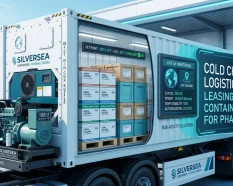
- Reefer containers can store beverages or food safely.
- Modified containers with windows or service hatches are ideal for ticketing.
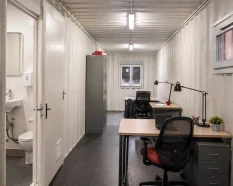
✔ Always ask the provider for an internal layout plan
This prevents unexpected limitations, especially when adding furniture or machinery.
Mistake 2:
Poor placement planning (ground, access, and orientation)
Choosing where to place a container is more complex than it seems. A common mistake is rental teams confirming the delivery without evaluating the terrain or access route.
Typical problems
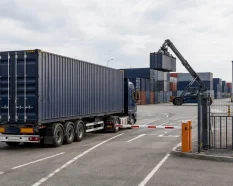
- Delivery truck cannot enter the venue
- Container cannot be off-loaded due to obstacles (cables, trees, fences)
- Uneven or muddy ground causes instability
- Wrong orientation affects ticketing or crowd flow
- Safety hazards due to poor positioning
What to do instead
✔ Inspect the location in advance
Walk the site with the operations team.
Look for:
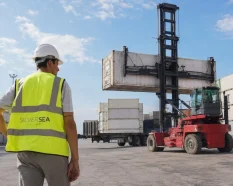
- Clear access for a crane or HIAB truck
- Minimum turning radius
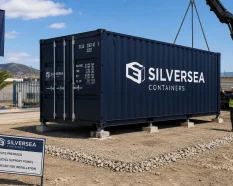
- Stable ground (preferably compacted)
- Adequate drainage
- No overhead obstacles
✔ Take measurements
A 20ft container requires approx. 30 ft of space for the truck to maneuver.
A 40ft unit may need 50–60 ft depending on the vehicle size.
✔ Plan orientation based on crowd flow
For example, ticketing containers should face the main access or queueing area.
✔ Consider weather conditions
Rain can turn grassy areas into mud—elevating the container on blocks may be needed.
Mistake 3:
Forgetting about power, ventilation, and safety requirements
Many event containers are used for electrical equipment, refrigeration, or staff areas. Ignoring technical requirements can lead to malfunctions or even safety risks.
Problems that typically arise
- Containers overheating due to lack of ventilation
- Insufficient electrical outlets
- Overloaded circuits
- Poor lighting
- Condensation affecting electronic systems
- Refrigeration failure in reefer containers
How to avoid this
✔ Clarify technical needs before renting
Ask your providers:
- How many amps do you need?
- Are you running AC units or heaters?
- Will you use fridges, coolers or cooking equipment?
- Is the container a workspace (requires ventilation, lighting)?
- Will people enter and stay inside?
✔ Consider adding upgrades
- Air conditioning or heating
- Insulation
- LED internal lighting
- Extra sockets
- Security locks
- Fans or extractor systems
✔ Check reefer power compatibility
Reefer units require 380–440V three-phase power. If the venue does not support this, you may need a generator.
Mistake 4:
Skipping permits, fire regulations or compliance checks
Events—especially in cities or large public spaces—often require explicit approval for temporary structures. Containers fall into this category.
Possible consequences
- Fines issued by local authorities
- Forced container removal during the event
- Delays in opening day
- Fire marshal rejection
How to prevent compliance issues
✔ Consult local regulations
Every municipality is different. Requirements may include:
- Temporary structure permit
- Health & safety documentation
- Fire escape routes and signage
- Maximum occupancy
- Noise and ventilation compliance
- Electrical certificates
✔ Inform the container provider
Share your compliance requirements early so the provider can prepare:
- Fire-retardant materials
- Anti-slip flooring
- Rated electrical installations
- Safety certificates
✔ Prepare documentation
Most events need:
- Event safety plan
- Floor plan with container placement
- Electrical compliance form
- Emergency access layout
Leaving this for last minute is a common and costly mistake.
Mistake 5:
Not coordinating delivery, setup and pickup with the event timeline
Events run on tight schedules. Containers must be delivered, installed, and removed with precision.
What goes wrong
- Delivery delayed because access roads are blocked
- Trucks arrive during build-up peak hours
- Crane rental overlaps with stage build or lighting rig setup
- Containers left on-site because pick-up was not scheduled
Best practices for flawless coordination
✔ Define exact delivery hours
Avoid clash with:
- Stage construction
- Tents installation
- Sound system rigging
- Vendor load-in
✔ Share a detailed site plan
Include:
- Access routes
- Container positions
- Drop-off sequence
- Crane location
✔ Keep communication tight
Operators, site managers, and transporters should share:
- Contact numbers
- Real-time updates
- Photos or site maps
✔ Schedule pickup ahead of time
Containers should be removed:
- After vendors load out
- Before dismantling tents or fencing
- Only when access is clear
A missed pick-up day can cost hundreds of euros in extra crane time.
Additional tips for event organizers renting containers
1. Ask for photo documentation
A reputable provider will send photos of:
- Interior
- Doors and locking gear
- Floor condition
- Electrical components
- External structure
This avoids surprises on delivery day.
2. Consider combining multiple units
Many events do this for:
- Ticketing + storage
- VIP lounge + bar
- Staff office + IT room
It improves operational flow.
3. Branding and signage
Containers can be:
- Wrapped
- Painted
- Fitted with banners
- Covered with magnetic panels
Plan this with enough lead time.
4. Weather-proofing
In winter or rainy seasons, ask for:
- Elevated supports
- Drainage solutions
- Rain covers
- Anti-slip mats
5. Check transportation insurance
Containers used for events should have:
- Liability coverage
- Damage protection
- Theft coverage (for valuable equipment stored inside)
Conclusion
Renting containers for events offers flexibility, durability, and a modern aesthetic for a wide range of use cases. However, avoiding the common mistakes summarized above is essential for smooth operations:
- Choose the right type and size
- Plan placement and access carefully
- Prioritize ventilation and power needs
- Handle permits and compliance proactively
- Coordinate logistics with precision
When done right, containers can elevate the efficiency, safety, and overall experience of any event.