














Demurrage fees. Equipment shortages. Operational delays. Every logistics manager knows these pain points—and how they can quickly eat into margins.
One increasingly popular solution is the Shipper Owned Container (SOC). Unlike Carrier Owned Containers (COC), SOCs give companies more control, predictability, and cost savings across global trade routes.
This guide explains what SOCs are, how they differ, and why they’re becoming a strategic advantage for logistics managers worldwide.
What is a Shipper Owned Container (SOC)?
A clear definition
A Shipper Owned Container (SOC) is a shipping container that belongs to the shipper, forwarder, or cargo owner—not the carrier.
When you ship with SOCs:
- You own (or lease independently) the container.
- You negotiate freight space with carriers, but you’re not tied to their equipment.
- You eliminate demurrage/detention penalties from late container returns.
- You gain direct control over equipment condition, movement, and availability.
In short: SOC = freedom from carrier dependency.

SOC Containers vs. Carrier Owned Container:
The key differences at a Glance
| Factor | SOC (Shipper Owned Container) | COC (Carrier Owned Container) |
|---|---|---|
| Ownership | Shipper / Forwarder | Shipping Line / Carrier |
| Demurrage & Detention Fees | ❌ None | ✅ Applies if late |
| Control Over Container | High – shipper decides | Low – carrier decides |
| Flexibility on Routes | High, especially on imbalanced trade lanes | Limited to carrier’s availability |
| Maintenance Responsibility | Shipper | Carrier |
| Best For | Companies seeking control, cost savings, equipment security | Shippers with low frequency or one-off needs |
The Business Case for SOC:
Why It’s a Strategic Advantage
Adopting SOCs isn’t just about avoiding fees. It’s about building supply chain resilience and financial efficiency.
Gaining control over your supply chain
- Decide where containers are positioned, how long they stay, and when they’re moved.
- Reduce dependence on carrier schedules and equipment pools.
- Build a dedicated fleet strategy aligned with your own operations, not a carrier’s.
Drastically reducing demurrage and detention fees
- Demurrage charges: $75–$200 per container per day after free time.
- Detention charges: similar or higher depending on region.
- With SOC, these costs disappear—yielding 5–15% direct savings on many trade lanes.
Improving equipment availability and flexibility
- On imbalanced trade routes, COCs may be scarce (e.g., exports from inland US to Asia).
- SOC ensures you always have equipment available.
- One-way SOC leases allow efficient repositioning and reduced empty return costs.
When does using SOC make financial sense for your company?
SOC containers add the most value when:
- You operate on longer free-time routes prone to demurrage risks.
- Your shipments are on imbalanced trade lanes where carriers restrict equipment.
- You run high-volume, repeat trade flows where container control reduces long-term cost.
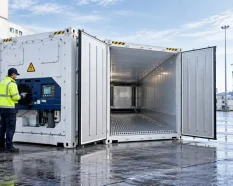
- Your business requires specialized container types (e.g., Reefers, Flat Racks, Open Tops).
💡 For one-off low-volume shipments, COC may still be easier. For recurring, high-cost flows, SOC wins.

How to implement a SOC strategy
Adopting SOC doesn’t mean replacing all COC usage. It means strategically integrating SOC where it delivers ROI.
- Analyze current costs
- Review demurrage/detention fees over the past 12–24 months.
- Identify trade lanes with recurring penalties or shortages.
- Decide between owning vs. leasing SOCs
- Long-term, high-volume flows → consider purchase.
- Variable or seasonal flows → flexible leasing (short-term, one-way, pool).
- Work with a reliable SOC provider
- Ensure containers are certified (CSC/ISO).
- Choose a partner with stock in strategic ports (e.g., Newark, Long Beach, Houston, Savannah).
- Secure maintenance and inspection services.
- Integrate SOC into operations
- Train staff on SOC booking processes.
- Negotiate freight rates without relying on carrier equipment.
- Track container utilization for ROI analysis.
Discuss your SOC needs with our logistics team
At SILVERSEA Containers, we help logistics managers, forwarders, and import/export companies integrate SOC into their operations with:
✅ Certified container stock in all major U.S. and global ports
✅ Flexible leasing models (one-way, short-term, long-term)
✅ Technical and legal advisory on SOC documentation
✅ Proven strategies to cut demurrage costs and increase fleet reliability
📩 Ready to reduce costs and gain control of your supply chain?
👉 Request a tailored consultation
👉 View available SOC containers
For logistics managers, the decision between SOC and COC is no longer just about container ownership. It’s about strategic control over costs, schedules, and resilience in global trade.
By adopting SOC where it matters most, you not only eliminate hidden fees—you future-proof your supply chain.