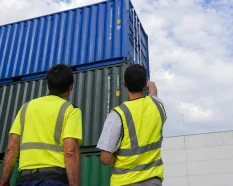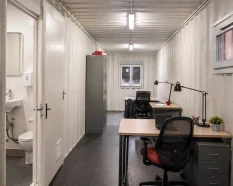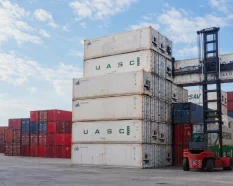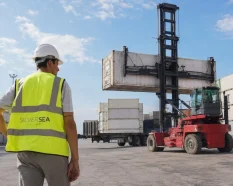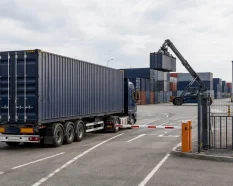














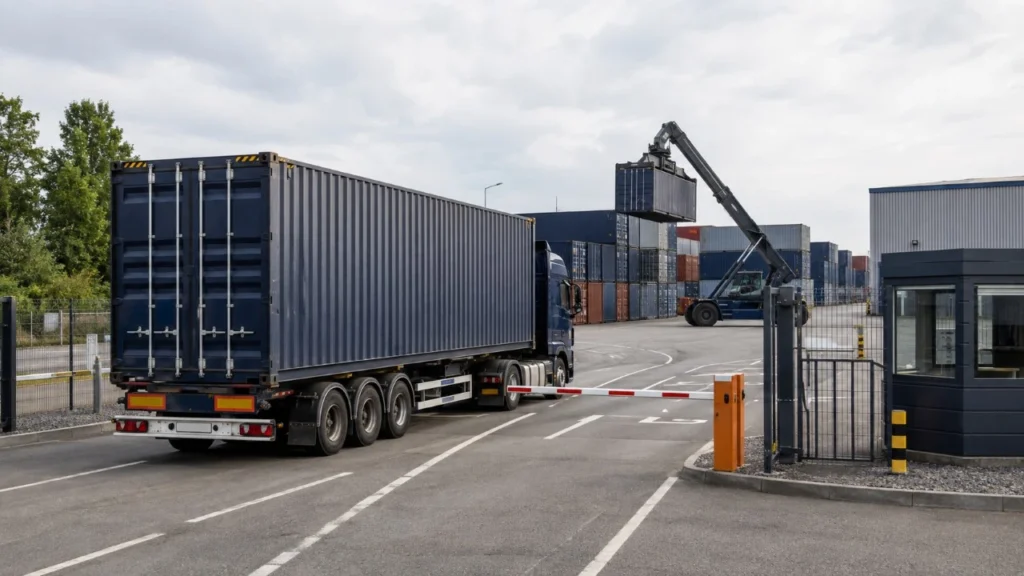
Choosing a container depot is not simply a matter of finding the nearest yard. A suitable depot must be authorised for the movement, accept the exact container and operation, fit the inland transport plan and provide the services needed at the right time.
That distinction matters because a depot can be convenient on a map and still be unusable in practice. The wrong location may reject the container, require a different reference, lack the right lifting equipment, offer storage without cargo access or create extra haulage and handling costs.
The quickest way to make the right decision is to confirm five points before dispatching a truck:
- Who controls the container and the depot instruction?
- Is the movement a pickup, return, off-hire redelivery or storage operation?
- Does the facility accept the exact size, type, condition and ownership status of the unit?
- What gate, appointment, documentation and service rules apply?
- What is the total operational cost, not just the depot’s headline rate?
What is a container depot?
A container depot is a facility used to receive, release, hold, inspect or service freight containers. Depending on the site, its services may include empty-container storage, lifting, condition checks, cleaning, repairs, reefer support, stuffing or destuffing, and short-term storage of laden equipment.
Not every depot offers every service. Some are primarily empty-equipment yards. Others support laden units, customs-controlled cargo or specialist equipment. The word «depot» alone does not confirm what the facility can do.
A depot is not automatically a terminal, warehouse or customs facility
These locations can form part of the same logistics chain, but they serve different functions:
- A container depot usually manages containers as equipment: receipt, release, storage, inspection and related services.
- A marine or inland terminal transfers containers between transport modes and may also provide stacking, gate and storage services.
- A warehouse or container freight station focuses on the cargo, including consolidation, deconsolidation, stuffing or destuffing.
- A customs temporary storage facility holds goods under a defined customs status and authorisation. It is not the same as ordinary commercial container storage.
This last distinction is especially important in cross-border operations. In the EU and the UK, customs temporary storage is a regulated status for imported goods before they are released, re-exported or placed under another customs procedure. A normal empty-container yard should never be assumed to provide that function.
Can you choose any container depot?
Not always. The degree of choice depends mainly on who controls the equipment and why it is moving.
Carrier-provided container linked to a shipment
For a container supplied as part of an ocean booking, the pickup and empty-return instructions are normally tied to that specific movement. The authorised location may appear in the booking confirmation, release order, delivery instruction or the carrier’s current return system.
Do not rely on an address used for a previous shipment. Equipment flows and depot instructions can change, even on a familiar route. If another location would reduce inland mileage, obtain written approval before redirecting the truck.
Leased container
A leased container must be collected and redelivered under the lease terms. At the end of use, the approved return point is commonly described as an off-hire depot.
The lessor’s written instruction may specify the depot, return period, equipment quantity, redelivery reference, condition criteria, inspection method and possible drop-off limits or charges. A depot being part of a wider network does not by itself authorise a particular return.
If the operation requires flexibility between origin and destination, compare the redelivery conditions before selecting the lease. SILVERSEA Containers explains the available operating models in the guide to maritime container leasing and one-way maritime container rental.
Shipper-owned container or privately owned unit
An owner of a shipper-owned container (SOC) normally has more freedom to arrange storage and positioning. However, the chosen depot still needs to accept the unit, and a terminal or ocean carrier may impose separate acceptance requirements if the container will re-enter maritime transport.
Confirm the container’s size and type code, condition, CSC status where applicable, lifting compatibility and any modifications. Non-standard dimensions or structures can change handling and acceptance requirements; see the SILVERSEA Containers guide to ISO and non-ISO containers for the main differences.
Purchased container awaiting collection or delivery
When a business buys a container for storage, conversion or project use, the release depot may be determined by the unit’s location. In that case, the practical question is not only whether the container can be collected, but whether the complete delivery plan works.
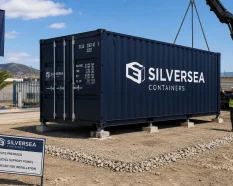
Check the release reference, collection window, loading method, haulier requirements and site access before committing to the movement. The container price and the delivery operation should be evaluated together. SILVERSEA Containers’ container purchase page provides the appropriate commercial route for purchase requirements.
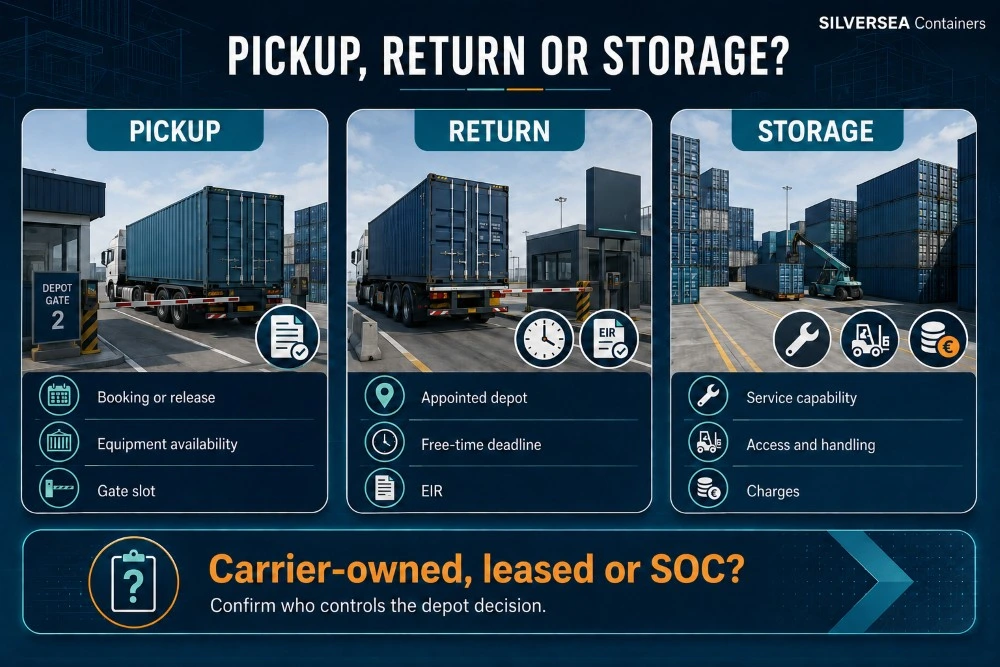
Pickup, return and storage are different depot operations
Using the same word for all three can hide important differences.
| Operation | Main purpose | Confirm before dispatch |
|---|---|---|
| Empty pickup | Release equipment for loading, transport or project use | Authorised release, unit availability, collection window, condition and gate procedure |
| Empty return or off-hire | Redeliver equipment after unloading or at the end of a lease | Appointed depot, deadline, reference, accepted condition and proof of receipt |
| Container storage | Hold empty or laden equipment for an operating period | Storage status, access, handling, security, services, charges and retrieval notice |
A depot that releases empty dry containers may not accept laden storage. A storage yard may not be authorised as the formal return point for a carrier-controlled unit. A depot that handles standard dry equipment may not have reefer plugs, tank-container capability or space for out-of-gauge units.
Define the operation first. Compare locations second.
How to compare container depots in Europe
1. Start with the authorised instruction
Before assessing price or distance, verify the latest document that controls the movement. Depending on the case, this may be:
- A booking confirmation or release order
- An empty pickup or return instruction
- A delivery order
- A lease or off-hire instruction
- A purchase release note
- A depot collection reference
- Written approval for a change of location
The depot name, address and location code should match the instruction. A truck appointment at an alternative facility is not a substitute for authorisation from the party controlling the equipment.
2. Compare the complete inland route
The closest depot is not always the lowest-cost option. Model the full cycle:
- Depot to loading or unloading site
- Site to port, rail terminal or next operating point
- Empty mileage before or after the loaded leg
- Road tolls, low-emission zones and vehicle restrictions
- Driver hours and possible overnight requirements
- Congestion, queueing and missed-slot exposure
- Rail or barge alternatives where relevant
- Feasibility of the return leg
A useful working formula is:
Total depot-related cost = inland transport + depot handling + storage or technical services + carrier or lessor charges + delay risk
This does not need to be a complex financial model. Its purpose is to prevent a low storage rate from obscuring extra haulage, lifting or waiting costs.
3. Check gate access and appointment rules
Many large terminals and depots use a Vehicle Booking System (VBS), pre-advice process or appointment window. Requirements vary by facility, so confirm:
- Whether a truck slot is required
- Booking and amendment cut-off times
- Opening hours and public-holiday restrictions
- Driver registration or identification
- Vehicle, chassis or licence-plate pre-advice
- Accepted arrival tolerance
- Cancellation, late-arrival and no-show rules
- Expected turnaround and waiting-time policy
Share these instructions with the haulier before the vehicle departs. A suitable depot can still cause a failed movement if the gate reference or slot is missing.
4. Confirm the exact equipment accepted
Do not ask only whether the depot handles «shipping containers». Provide the information needed to identify the unit and the service:
- Container number, if already assigned
- ISO size and type code where available
- 20 ft, 40 ft or 45 ft
- Standard or High Cube
- Dry, reefer, open top, flat rack, tank or other special type
- Empty or laden status
- Carrier-controlled, leased, SOC or purchased status
- Gross mass where relevant
- Cargo class or dangerous-goods status where applicable
- Known damage or modification
The depot must have the space, lifting equipment, safety procedures and authorisation required for the specific operation. Browse SILVERSEA Containers’ maritime container types if the equipment requirement is still being defined.
5. Verify the required services, not a generic service list
Ask whether the service is available for the exact equipment, date and location. Relevant services may include:
- Lift-on and lift-off
- Empty or laden storage
- Condition survey and photography
- Cleaning and repair
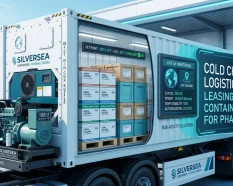
- Reefer electricity and monitoring
- Pre-trip inspection for refrigerated units
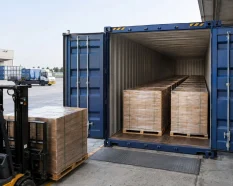
- Stuffing, destuffing or cargo access
- Weighing
- Customs-controlled handling
- Dangerous-goods or out-of-gauge acceptance
Availability can vary within the same depot network. Written confirmation is more useful than a general website service list.
6. Define storage access and retrieval conditions
«Container storage» can mean very different things. Before agreeing to it, confirm:
- Whether the unit will be empty or laden
- Whether cargo access is allowed while stored
- How much notice is needed for access or release
- Whether the unit may be stacked beneath other containers
- How many lifts are included in the quote
- Whether frequent access changes the rate or operating plan
- Who is responsible for locks, seals and insurance
- Whether reefer monitoring or other ongoing services are required
If a team needs regular access to tools, materials or inventory, a conventional operating stack may be unsuitable even when the yard accepts the container.
7. Separate commercial storage from customs status
For loaded imports, confirm whether the cargo is already customs-cleared and whether a customs-authorised facility is required. Ordinary depot storage, customs temporary storage and customs warehousing are not interchangeable.
European Commission guidance on importation explains that non-Union goods presented to customs remain under customs supervision until they are placed under a procedure or re-exported. UK guidance likewise treats temporary storage as an authorised customs activity. When customs status is relevant, confirm the route with the customs representative and the facility before moving the unit.
8. Record condition at every handover
Container condition should be documented when custody changes. The record may be an Equipment Interchange Receipt (EIR) or an equivalent electronic gate record.
Check that it identifies the correct:
- Container number
- Date, time and facility
- Gate-in or gate-out movement
- Visible condition and damage notes
- Seal details for a laden unit, where relevant
- Haulier or vehicle information
Take clear photographs at pickup and return, including all sides, doors, roof where safely visible, interior and any existing damage. If the record is wrong, raise the discrepancy promptly and preserve the evidence.
Which container depot charges should you confirm?
Depot and inland charges vary by operator, country, equipment and contract. Request a written breakdown covering every component that may apply:
- Haulage, empty mileage, tolls and driver waiting time
- Gate, administration or documentation fees
- Lift-on, lift-off, shunting and additional moves
- Daily storage rate, minimum period and any free period
- Handling required when the container is released
- Inspection, survey, cleaning and repair
- Reefer power, monitoring and technical attendance
- Special-equipment or dangerous-goods surcharges
- Appointment changes, late arrival or no-show
- Alternate-depot, drop-off or repositioning charges
Storage, demurrage and detention should not be treated as synonyms
The commercial definitions and free-time structures can vary by contract, but the cost categories are different:
- Depot or terminal storage pays for physical space and related handling at a facility.
- Demurrage commonly relates to carrier equipment remaining within a port or terminal beyond the applicable free time.
- Detention commonly relates to carrier equipment remaining outside the port or terminal before authorised return.
Always use the definitions and tariff that govern the actual shipment. Moving a carrier-controlled container to a commercial storage yard does not necessarily stop equipment-time charges; the unit normally has to be returned and accepted under the applicable instruction.
A seven-step workflow before dispatching the truck
- Identify the equipment controller. Establish whether the unit is carrier-provided, leased, shipper-owned or purchased.
- Define the movement. State clearly whether it is pickup, empty return, off-hire redelivery or storage.
- Validate the depot. Match the location to the current release or return instruction and obtain approval for any change.
- Confirm the unit and service. Send the size, type, status, condition and required handling details.
- Price the complete cycle. Include haulage, lifting, storage, services, equipment time and delay exposure.
- Book the gate movement. Obtain the required slot, reference and driver instructions.
- Close the handover. Collect the EIR or equivalent receipt, photographs and final charge confirmation.
For a time-sensitive return, recheck the authorised location shortly before dispatch. A previously valid instruction may have been amended during the shipment cycle.
Questions to ask a container depot or equipment provider
Use this checklist before confirming the movement:
- Is this facility authorised for this specific pickup, return or off-hire?
- Do you accept this container number, size, type and ownership status?
- Can you handle the unit empty or laden as required?
- Is a VBS slot, pre-advice or gate reference required?
- What documents must the driver present?
- What are the collection or return window and opening hours?
- Are inspection, cleaning, repair or reefer services available if needed?
- Can the cargo be accessed while the container is stored?
- Which charges apply at gate-in, during storage and at release?
- What receipt and condition record will be issued?
- Who should be contacted if the truck is delayed or the depot rejects the unit?
- Does customs status or cargo classification require a different facility or procedure?
Common mistakes when choosing a container depot
- Choosing only by distance. Distance matters, but an inconvenient gate slot, extra empty leg or additional lift can outweigh a shorter route.
- Using an old return address. A location used previously may not be authorised for the current container or booking. Always check the latest instruction.
- Assuming all depots accept all equipment. Reefers, tanks, open tops, flat racks, modified units and laden containers can require different infrastructure and approvals.
- Treating storage as on-demand cargo access. A container stored in an operating stack may require notice and additional lifts before the doors can be reached.
- Comparing incomplete quotations. A daily storage rate is not a complete price. Handling, retrieval, waiting time, technical services and redelivery charges can materially change the total.
- Failing to document condition. Without a receipt and photographs, it is harder to distinguish existing damage from damage alleged after the handover.
How SILVERSEA Containers can support the planning process?
Depot planning is part of a wider equipment decision. The right purchase or lease option depends on where the container is needed, how it will be used and what should happen at the end of the operating period.
When requesting an assessment, provide SILVERSEA Containers with:
- Country, city, port or inland area
- Container type and quantity
- Intended use and cargo status
- Preferred pickup or delivery date
- Expected operating period
- Planned return or redelivery location
- Whether the unit will enter maritime transport
- Required storage, reefer or technical services
SILVERSEA Containers can use this information to assess suitable purchase, leasing or one-way alternatives, subject to equipment availability, location and confirmed depot conditions. For carrier-provided equipment linked to an ocean booking, the official pickup and empty-return instruction remains controlled by the relevant shipment documentation.
Request a tailored container quote and include the location, equipment, dates and expected redelivery plan.
Faqs
A depot mainly receives, releases, stores or services containers. A terminal primarily transfers containers between road, rail, barge or vessel, although it may also provide storage and gate services. The names are sometimes used loosely, so confirm the actual function of the facility.
No. A carrier-provided container normally has an appointed return location, while a leased unit requires an authorised off-hire depot. A different depot should only be used after written approval.
An off-hire depot is a location authorised to receive leased equipment at the end of use. The redelivery reference, deadline, condition requirements and charges come from the lease or redelivery instruction.
An Equipment Interchange Receipt, or EIR, records the receipt or release of full or empty equipment. It commonly identifies the container, movement, time, location and visible condition. Some facilities use an electronic equivalent.
No. Some depots accept only empty equipment. Laden storage may require different security, insurance, customs, dangerous-goods or operating arrangements. Cargo access during storage must also be confirmed.
Not automatically. If the container is controlled by an ocean carrier, equipment-time charges may continue until the unit is returned and accepted at the authorised location under the applicable terms.
No. Reefer power and monitoring, tank-container handling, out-of-gauge space and dangerous-goods storage require specific equipment, procedures or authorisation. Confirm the exact service for the exact unit and date.
Send the location, movement type, dates, container size and type, quantity, ownership status, empty or laden status, intended use and required services. If the unit is already assigned, include its container number and the controlling reference.