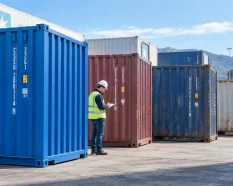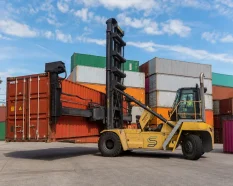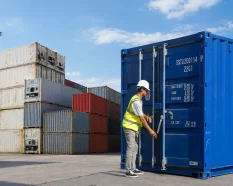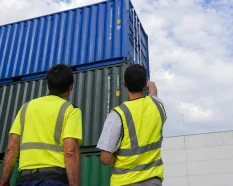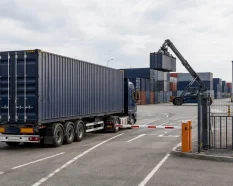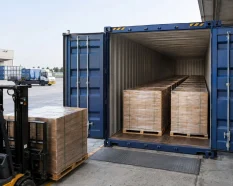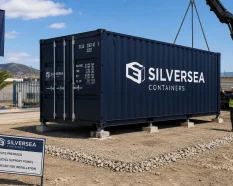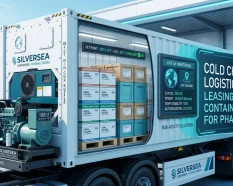














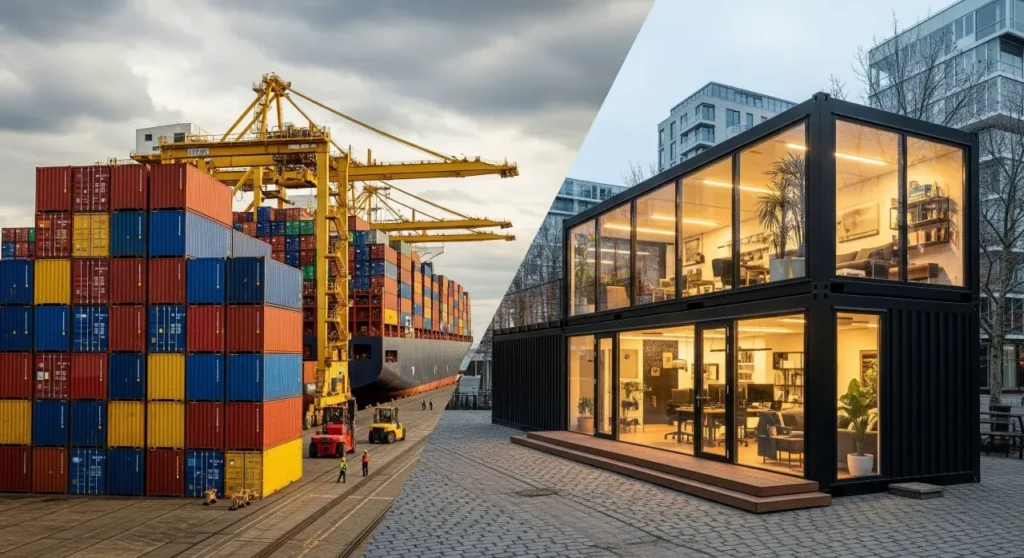
The container you choose can determine whether your cargo travels smoothly across global shipping networks—or becomes a costly logistics problem. Understanding the difference between ISO and non-ISO containers is essential for shippers, logistics managers, construction companies, and buyers who need to ensure safety, compatibility, and compliance.
Although all containers look similar on the outside, they are not equal.
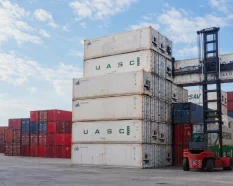
- ISO containers follow strict international standards that allow them to be stacked, lifted, transported, and secured safely across ports, ships, trucks, and rail systems worldwide.
- Non-ISO containers, on the other hand, serve more specialized or local uses and do not always meet the dimensional, structural, or safety requirements for multimodal transport.
This guide explains what ISO certification means, how ISO and non-ISO containers differ, the implications for transport and stacking, and when each option makes sense.
What is ISO in containers?
ISO refers to the International Organization for Standardization, specifically ISO standards ISO 668, ISO 6346, ISO 1496, and related regulations that define the dimensions, structural tolerances, corner casting positions, identification codes, and performance requirements of intermodal freight containers.
An ISO container must comply with:
✔ Standardized external dimensions
Such as:
- 20 ft (20’ x 8’ x 8’6“)
- 40 ft (40’ x 8’ x 8’6“)
- 40 ft High Cube (40’ x 8’ x 9’6”)
These dimensions allow seamless movement across ships, trains, and trucks.
✔ Standard corner castings and locking points
This enables:
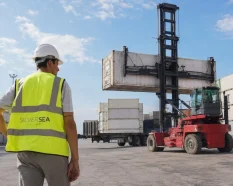
- Lifting by cranes
- Locking on vessels using twistlocks
- Stacking up to 6–8 units high
- Securing on chassis and wagons
✔ Structural resistance and testing
ISO containers must pass certified tests for:
- Racking
- Lifting under full load
- Impact
- Floor load capacity
- Weather resistance
✔ Standard identification (ISO 6346)
Every ISO container must have a:
- BIC code
- Owner prefix
- Serial number
- Check digit
- Size and type code
This identification is essential for port logistics, tracking systems, and customs.
✔ CSC Plate (Convention for Safe Containers)
Required for international transport.
Indicates safety approval and inspection dates.
What is a non-ISO container?
Non-ISO containers include any container that does not follow ISO standards in shape, size, structure, or lifting specifications.
They are typically designed for:
- On-site storage
- Construction and industrial use
- Modular buildings
- Agriculture
- Mining camps
- Offshore platforms
- Customized applications
Non-ISO containers cannot be used in most intermodal transport systems because they lack standardized dimensions and structural points required for safe handling.

Key differences between ISO and non-ISO containers
Below is a direct comparison that clarifies how they differ in logistics, safety, and operational use.
A) Dimensions and compatibility
| Feature | ISO Container | Non-ISO Container |
|---|---|---|
| External size | Standardized (ISO 668) | Custom or non-standard |
| Compatibility | Global transport systems | Limited to on-site/local use |
| Corner castings | Standard placement | May differ or be absent |
| Fits on chassis/wagons | Always | Not guaranteed |
B) Structural resistance
ISO containers must meet load and stacking tests. Non-ISO units may not support:
- Stacking more than 1–2 high
- Crane lifting
- Twistlock securing
- Heavy floor loads
This is critical in safety-sensitive environments.
C) Identification and traceability
ISO containers have mandatory codes under ISO 6346.
Non-ISO containers typically have:
- No BIC code
- No check digit
- No globally recognized identification
This makes them unsuitable for integrated supply chains.
D) Use cases
ISO Containers (standard)
Used for:
- International shipping
- Rail transport
- Road transport
- Intermodal hubs
- Port storage
- Reefer operations
Non-ISO Containers (custom)
Used for:
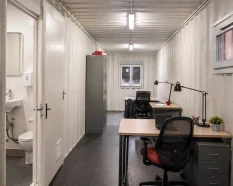
- Offices
- Workshops
- Laboratories
- Retail pop-ups
- Hazardous material storage
- Agricultural structures
- Energy stations
- Mining modules
E) Stacking and transport implications
ISO containers can be stacked 6 to 8 units high on vessels and up to 9 high on land with correct support.
Non-ISO containers:
- Often cannot be safely stacked
- May collapse under upper load
- Cannot be secured with twistlocks
- Require forklifts instead of spreader cranes
- May need custom platforms or supports
Examples of non-ISO containers
Common non-ISO structures include:
✔ 10-foot containers: Smaller, used for storage or retail booths.
✔ 8-foot or mini-containers: Popular in construction or events.
✔ 45-foot pallets wide containers (non-ISO variants): Some have extra width that breaks ISO specifications.
✔ Modular building containers: Adapted with windows, doors, insulation, interior walls.
✔ Offshore containers (DNV-certified): Strongly built for use on oil platforms under DNV 2.7-1 standard, not ISO.
✔ Military or special-purpose containers: Built for extreme conditions.
✔ Refrigerated custom modules (non-ISO dimensions): These may follow safety rules but do not meet ISO 668.
5. Use implications: why ISO compliance matters
Choosing a non-ISO container when ISO compliance is required can create significant operational issues.
A) Transport limitations
ISO containers fit:
- Any vessel slot
- Any intermodal chassis
- Any rail wagon
Non-ISO units may require:
- Special permits
- Custom vehicles
- Local transport only
B) Higher logistics cost
Non-standard dimensions can trigger:
- Oversize load fees
- Custom route planning
- Manual handling
- Storage surcharges
C) Safety concerns
Because they may not be certified for stacking or lifting, non-ISO containers can:
- Fail when lifted by crane
- Collapse under stacking load
- Shift during road transport
- Be rejected at ports or terminals
D) Regulatory compliance
- ISO containers must carry a CSC plate for global shipping. Without it, customs and ports can deny access.
- Non-ISO units are not eligible for a CSC plate unless adapted and certified through a complex process.

When to choose an ISO container
Select an ISO container when:
- You need to ship cargo internationally
- The container must be handled in ports
- You require stacking beyond two units
- You need a standardized footprint (20’ or 40’)
- You rely on normal chassis or wagons
- You need traceability via ISO 6346 codes
- The load is part of an integrated logistics chain
Examples:
- Exporters/importers
- Freight forwarders
- Manufacturers shipping in bulk
- Pharmaceutical or food companies
- E-commerce and retail consolidators
When a non-ISO container makes sense
Choose a non-ISO container when:
- You need a custom size or internal layout
- The structure is for stationary use
- You need extra width or height for workshops
- The use is architectural or modular
- Port mobility is not required
- You need specialized design (vents, insulation, doors, reinforcements)
Typical industries:
- Construction
- Agriculture
- Military
- Events
- Mining
- Renewable energy
- Modular housing
Cost comparison
ISO containers are priced higher due to standardized construction and compliance requirements.
ISO Containers (used)
- 20 ft: €1,800–€2,800
- 40 ft: €2,500–€4,000
- High Cube: +€300–€600
Non-ISO Containers
Price varies widely based on customization:
- Small units (8 ft / 10 ft): €1,200–€3,000
- Modified offices: €3,000–€15,000
- Modular buildings: €20,000–€100,000+
Frequently asked questions
Yes, they undergo standardized stress, stacking and lifting tests.
Generally no, unless it obtains a CSC certification, which is costly and uncommon.
No. They follow DNV 2.7-1, a different standard.
Unsafe unless specifically engineered and certified.
Ports and carriers will reject it without ISO compliance and CSC plate.
n summary, the choice between an ISO and a non-ISO container is a strategic decision. ISO containers are the only safe and compatible option for global and intermodal transport, while non-ISO containers are ideal for specialized, stationary, or custom-designed solutions (such as modular offices or local storage).
Need the exact container for your project—whether for international shipping or a custom solution?
Ensure compatibility, safety, and the best price.→ Request a free, no-obligation quote now! Our team of experts will guide you to select the container that meets 100% of your logistical and regulatory requirements.