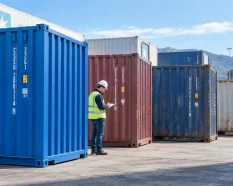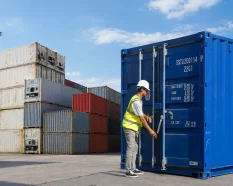















Stacking containers is a fundamental part of global logistics. Whether at ports, depots, warehouses, or construction sites, containers are stacked to optimize space, improve storage efficiency, and support seamless freight movement.
But stacking isn’t as simple as placing one unit on top of another: it’s governed by international regulations, structural engineering principles, and safety guidelines designed to prevent accidents and ensure container integrity.
This guide explains what container stacking is, how it works, the standards that regulate it, and how many containers can be safely stacked under different conditions. We’ll cover requirements from ISO standards, Port Authority regulations, CTU Code, construction compliance rules, and best practices used by major terminals worldwide.
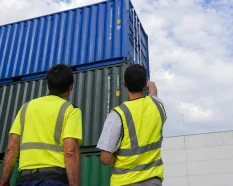
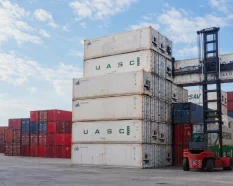
Container stacking is the practice of placing shipping containers vertically on top of each other, typically in rows or blocks, to maximize yard or storage space.
What is container stacking?
Containers are engineered to carry vertical loads through their corner castings, allowing multiple units to be stacked safely.
Stacking is common in:
- Seaports
- Inland container depots
- Logistics yards
- Distribution centers
- Construction sites
- Temporary storage operations
How many containers can be stacked? (General rule)
The most common stacking height used worldwide is:
Up to 6–8 containers high in standard yard conditions
However, the exact limit depends on:
- Container type
- Age and condition
- Wind exposure
- Ground stability
- Terminal equipment
- Local regulations
Up to 9 containers high
In controlled port environments with RTGs or RMGs (using new units in excellent structural condition).
Usually 2–3 containers high
In construction or non-port settings, stacking is more conservative, due to regulations, safety, and access.
Which ISO standards apply to container stacking?
Stacking regulations are based primarily on:
1. ISO 1496-1 (Series 1 Freight Containers)
This standard defines:
- Structural resistance
- Stacking test loads
- Corner post strength
- Allowable vertical force
According to ISO 1496-1:
A container must withstand a vertical force equivalent to 192,000 kg applied to the corner castings, representing the weight of 8 fully loaded containers stacked above it.
2. ISO 668 (Container Classification)
Defines:
- Maximum gross weight (MGW)
- External dimensions (affects stacking uniformity)
A standard 40ft container has a MGW of:
- 30,480 kg (ISO maximum)
And is engineered to handle stacking loads accordingly.
3. ISO 3874 (Handling and Securing)
Regulates:
- Lifting operations
- Stacking procedures
- Use of twistlocks and lashing equipment
- Safety distances
This is the main standard used in ports for safe operations.

How container stacking works (Mechanics)
Containers carry stacking loads through their corner posts, not their side walls or roof.
Load transfer process:
- Weight from upper containers is transferred through their corner castings.
- Force moves vertically through the corner posts.
- The lower container receives the load on its own corner posts.
- Ground or chassis absorbs final force.
This is why:
- Damaged corner posts are dangerous
- Uneven terrain increases risk
- Modified containers (with structural cuts) require reinforcement
- Containers must be aligned properly
Container stacking in ports and depots
Ports follow some of the strictest stacking rules because of:
- High wind exposure
- Heavy machinery
- Constant movement of stacks
Typical port stacking patterns
- Block stacking – containers stacked in blocks of 5–7 units
- Straddle carrier yards – 3–4 high
- RTG/RMG yards – up to 6–9 high
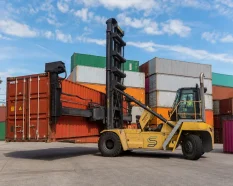
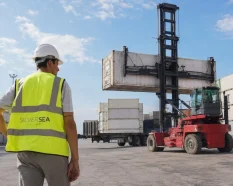
- Reach stacker yards – typically 4 high
Key safety considerations
- Wind load calculations
- Ground compaction
- Daily equipment inspections
- Twistlock usage above certain heights
- Stacking by weight (heavy at bottom, light at top)
- Separate stacks by container type
Container stacking in construction sites
Construction sites often use containers for:
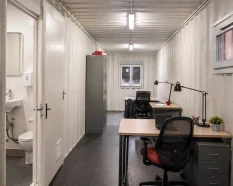
- Offices
- Storage
- Housing modules
- Security booths
Here, regulations are much more restrictive.
Common limits:
- 2 containers high for offices, especially if people will enter
- 3 high maximum for storage purposes, and only with engineering approval
Regulations generally require:
- Structural certification from the provider
- Anchoring or fixing systems
- Anti-slip walkways
- Guardrails on roofs or walkways
- Fire escape planning if used as offices
Because containers in construction sites are often modified (windows, doors, joint structures), engineers must evaluate reinforcement needs.
Container stacking in logistics yards and warehouses
Private yards tend to follow intermediate rules:
3–5 containers high depending on:
- Ground levelness
- Equipment available
- Exposure to wind
- Container age
Common mistakes to avoid
- Mixing 20ft and 40ft units in same stack
- Stacking reefers in non-supported positions
- Stacking damaged containers
- Placing heavy containers above light ones
Container stacking on ships (Maritime regulations)
Stacking at sea is heavily regulated under:
- International Maritime Organization (IMO)
- Safety of Life at Sea (SOLAS)
- CTU Code
On ships, containers are lashed using:
- Twistlocks
- Lashing rods
- Turnbuckles
- Stack cones
Common stacking height at sea:
- 6–7 containers above deck
- In some ultra-large container vessels: 8–10 high
Stacking must consider:
- Roll and pitch forces
- Lashing bridge positions
- Ship stability calculations

Regulations by country (Summary)
While standards are international, some countries and ports impose additional rules.
United Kingdom
- HSE requires risk assessment for stacks above 3 containers outside port zones
- Construction sites: typically maximum 2 high for offices
United States
- OSHA regulates stacking in work environments
- Unstable stacks can result in fines
- Ports follow ANSI and ISO standards
Spain
- Puertos del Estado follows ISO + UNE guidelines
- Many terminals allow up to 6–8 high depending on machinery
Germany
- Highly strict engineering evaluations required for modified containers
- Stacks above 3 high on construction sites need structural certification
Middle East / Gulf
- Some terminals operate with 8–9 high stacks due to high throughput
- Strict wind protocols in place
Safety risks if stacking is not done correctly
Improper stacking can cause:
- Container collapse
- Damage to cargo
- Injury to workers
- Machinery accidents
- Structural failure due to wind
Top causes of stacking incidents
- Damaged corner posts
- Uneven ground
- Overweight containers
- Poor alignment
- Excessive wind
- Using containers without CSC plate

Best practices for safe container stacking
✔ 1. Inspect containers before stacking
Reject containers with:
- Damaged corner posts
- Major corrosion
- Bent frames
- Missing corner castings
✔ 2. Stack by weight
Heaviest at bottom → lightest at top.
✔ 3. Align containers properly
Corner posts must sit perfectly on top of each other.
✔ 4. Use twistlocks or cones when needed
Essential for high-stacks or windy areas.
✔ 5. Consider wind exposure
In areas like coastal ports, wind can topple stacks over 6–7 high.
✔ 6. Keep records of container condition
Ports often tag units with tracking systems for safety.
✔ 7. Use trained personnel only
Lifting and stacking must be done by certified operators.
FAQ
Yes, but they must be aligned properly and connected to power sources designed for stacked reefer blocks.
No. 20ft and 40ft containers should not be stacked together without special support frames.
Yes. Any structural modification requires engineering evaluation.
No. Older containers or units with repaired posts may have reduced capacity.
Container stacking is essential to modern logistics, but it must be done within the limits defined by ISO standards, port regulations, construction guidelines, and maritime safety rules. Understanding how stacking works—and the structural, environmental, and operational factors involved—ensures safe operations and prevents costly or dangerous incidents.
By following global best practices and respecting load limits, logistics operators, construction companies, and depot managers can stack containers safely, efficiently, and in full compliance with international standards.