














Let’s address the most frustrating paradox in global logistics: you can track a $10 pizza delivery to your front door in real-time on your smartphone, but when you ship a $500,000 cargo load across the Atlantic, you often have to rely on outdated, delayed status updates.
«I own 50 SOCs, they are somewhere between Shanghai and Rotterdam, and right now, I have absolutely no idea where they are.» If you are a Logistics Manager, you have probably said these exact words while staring at a frozen tracking portal.
For decades, the supply chain industry has accepted poor visibility as an unavoidable cost of doing business. But in 2026, the tolerance for this blind spot has dropped to zero. Freight forwarders and enterprise shippers are taking control by shifting from Carrier Owned Containers (COC) to Shipper Owne Containers (SOC)—and they are strapping Internet of Things (IoT) sensors to them.
As your trusted logistics consultants, we are going to break down how IoT container tracking actually works, why owning your boxes is the only way to implement it properly, and how this technology permanently eliminates the anxiety of missing cargo.

The Blind Spot in Global Logistics
To understand why IoT is revolutionary, you have to understand why the traditional tracking model is broken.
When you use a shipping line’s container (COC), your visibility is tied to EDI (Electronic Data Interchange) milestones. You only get an update when the container is physically scanned or gated at a terminal: Loaded on vessel, Discharged, Gated out.
The problem? These milestones are notoriously delayed. A container might be sitting at a rail ramp for 48 hours before the system updates to tell you it has arrived. If your container gets rolled (left behind) at a transshipment port, you might not find out until days later. You are driving completely blind between these milestones.
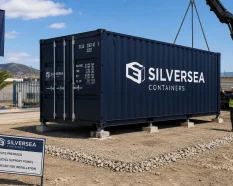
Here is the strategic advantage of a Shipper Owned Container (SOC): ownership grants you the right to modify. Shipping lines will not allow you to permanently bolt, weld, or install third-party tracking hardware onto their COCs. But when you own the steel, you make the rules. You can transform a standard dry van into a «smart container» that pings its exact location and status continuously, regardless of what the carrier’s system says.
How IoT Sensors Work on Steel Boxes
Let’s skip the tech buzzwords and look at the engineering. How do you get a signal out of a massive steel box?
Shipping containers are essentially Faraday cages; solid steel walls block radio and cellular frequencies from escaping the interior. Therefore, IoT tracking devices must be mounted on the exterior of the container.
Modern container tracking devices are compact, ruggedized nodes. They are usually mounted inside the deep corrugations of the steel side panels to prevent them from being scraped off by a port crane, or they are permanently bolted to the door hinges.
These devices use a combination of technologies to communicate:
- GPS/GLONASS: To pinpoint the exact coordinates of the box anywhere on earth.
- Cellular (4G/5G/LTE-M): To transmit data when the container is inland, on a truck, or near a coastal port.
- Satellite (Optional): For high-value cargo that requires continuous pinging even while in the middle of the deep ocean.
The sensor collects the data, transmits it to a cloud-based dashboard, and gives your logistics team a live map of your entire fleet.
Key Benefits for SOC Owners
Strapping an IoT device to your SOC fleet does more than just draw a dot on a map. It fundamentally shifts your supply chain management from reactive to proactive. Here is how the hardware translates into hard ROI.
GPS Location in Real-Time
Say goodbye to the «Where is my cargo?» phone calls. With active GPS tracking, you can set up geofencing. This means you draw a virtual perimeter around a port, a warehouse, or a border crossing on your digital map.
The moment your SOC enters or exits that invisible perimeter, your team receives an automated email or SMS alert. If a truck driver takes an unauthorized detour, or if a container sits at a customs inspection facility for more than 12 hours, you know instantly. This allows you to reroute trucks, inform your end-customers of precise ETA changes, and drastically reduce detention fees.
Temperature Monitoring (Reefers)
If you are moving pharmaceuticals, frozen meats, or fresh produce, location is only half the battle. Temperature stability is everything.
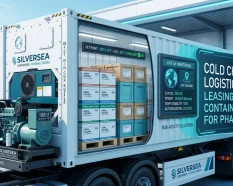
When you lease or buy Reefer SOCs, modern IoT devices can integrate directly with the container’s micro-controller (the brain of the cooling motor). Alternatively, independent data loggers are placed inside the cargo area. If the internal temperature deviates from the set point by even one degree—perhaps because the vessel lost power to the reefer plug—an alarm is triggered instantly.
Instead of discovering a million-dollar loss of spoiled goods when you open the doors at the final destination, you can alert the vessel crew immediately to check the breaker and save the cargo in transit.
Door Open Alerts (Security and Anti-Theft)
Cargo theft is a multi-billion dollar problem globally. High-value shipments (electronics, fashion, copper) are prime targets when resting at truck stops or rail yards.
Advanced IoT trackers include optical light sensors or magnetic door contacts. If the container doors are opened at any location outside of your authorized geofenced warehouses, the system triggers an immediate security breach alert. You will know the exact time and GPS coordinate where the container was compromised, allowing you to dispatch local authorities before the thieves have time to unload your goods.
Battery Life & Durability: Built for the Ocean
The most common question we get from CFOs and Operations Directors is: «Do I have to send someone to charge the batteries on 50 containers every week?»
Absolutely not. Industrial IoT trackers are not smartphones. They utilize LPWAN (Low Power Wide Area Network) technology. This means they sleep for most of the day, wake up to send a tiny packet of data (a «ping»), and go immediately back to sleep.
Depending on how often you configure the device to ping (e.g., once every 12 hours during ocean transit, and once every hour during inland trucking), a single industrial battery can last between 3 to 7 years.
Furthermore, these devices are built to an IP67 or IP68 standard. They are completely dust-tight, highly resistant to saltwater corrosion, and can withstand the extreme temperature swings of a steel box baking in the Dubai sun or freezing in a Canadian winter.
Upgrade Your Fleet with SILVERSEA Containers
Visibility is no longer a luxury; it is a baseline requirement for modern supply chains. But you cannot achieve true visibility if you don’t control the hardware.
At SILVERSEA Containers, we understand that transitioning to a Shipper Owned Container model is a strategic move. Whether you need a fleet of 10 or 100 units, we supply premium Cargo Worthy and One-Trip containers worldwide that are structurally flawless—the perfect foundation for mounting your IoT tracking hardware.
Stop renting blind boxes and start building a smart, resilient supply chain.